
It’s the end of the day. Your screen is filled with PDFs: discovery documents, contract exhibits, and immigration evidence packets spanning years. The deadline is tight. You know most of this material is repetitive, but you also know skimming creates risks. One missed inconsistency could undermine your entire case.
This is the tension attorneys face constantly. Speed versus accuracy. Efficiency versus responsibility. You need to move faster without making mistakes. You need to handle volume without sacrificing judgment.
This tension is why more attorneys are cautiously exploring AI legal document analysis as a support system. Not a replacement. Not a shortcut that bypasses your expertise. A tool that handles what machines do well, so you can focus on what requires actual legal reasoning.
What Legal Document Analysis Actually Means Today
Legal document analysis in modern practice goes far beyond keyword searches or control-F functions. Today’s tools identify patterns across hundreds of documents. They flag inconsistent clauses. They spot risk markers based on language patterns. They compare provisions across contracts to surface discrepancies.
Document review AI differs fundamentally from traditional document management. Management systems organize and store files. AI document review reads content, recognizes structures, and highlights areas that need your attention. It’s active analysis, not passive storage.
The technology doesn’t make legal conclusions; it surfaces information faster than manual review allows. You still evaluate. You still decide. You maintain complete professional responsibility for every judgment.
Where Attorneys Lose the Most Time
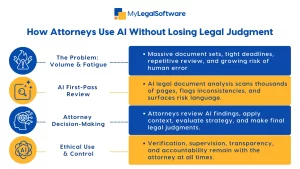
Manual document review creates hidden costs. Cognitive fatigue sets in after reading a similar language repeatedly. You start second-guessing yourself. Have you already reviewed this section? Are you missing something obvious because you’ve been staring at screens for six hours?
Repetition increases risk rather than reducing it. Your attention wanes. Small details blur together. Important differences get lost in the volume. You’re working hard, but your effectiveness drops as exhaustion builds.
This is where AI legal document review provides the most value, before you hit burnout and fatigue causes mistakes. The technology handles initial passes through large document sets, so you can focus your mental energy on complex analysis instead of repetitive reading.
How AI Actually Helps Without Replacing Your Judgment
Accelerating First-Pass Review
Document review AI processes volume at speeds humans cannot match. It reads thousands of pages quickly, flags relevant sections, and creates summaries of key points. You then review what the system surfaced instead of reading everything from scratch. This handles the volume problem, so you focus on nuance.
Surfacing What’s Easy to Miss
Pattern recognition reveals connections across documents that manual review might miss. Clause comparison shows how provisions differ across multiple contracts.
Anomaly detection highlights unusual language that warrants closer examination. AI legal document analysis excels at these systematic comparisons that would take humans days or weeks to complete manually.
Supporting, Not Deciding
The critical distinction is this: AI highlights, while you decide. The technology surfaces information, and you apply legal judgment. You evaluate context, consider client goals, and make strategic decisions. Attorney authority and ethical responsibility remain fully yours. Technology simply makes your decision-making more informed and efficient.
The Risks of Blind Trust
Legitimate concerns exist about over-reliance. Some attorneys might trust AI conclusions without verification. This creates serious problems. Context blindness happens when systems lack the background understanding that experienced attorneys bring. Garbage in, garbage out means poor quality inputs produce unreliable outputs.
Disciplined use of AI legal document review prevents these pitfalls. You verify AI findings. You provide context that the system cannot understand. You maintain oversight at every stage. Thoughtful attorney supervision isn’t optional, it’s the foundation that makes AI tools useful rather than dangerous.
How to Introduce AI Into Your Workflow Without Chaos
Start small with limited matters and defined goals. Don’t overhaul your entire practice overnight. Choose one document-intensive case. Test how document review AI handles your actual files.
Pair AI insights with human review. Never treat AI findings as final. Use them as starting points for your analysis. Keep documentation transparent for audits and client trust. Explain to clients how you use technology to support your work while maintaining professional judgment.
AI works best when integrated into comprehensive systems, not bolted onto existing chaos. When legal document analysis tools connect with your case management, document organization, and workflow, everything functions more smoothly.
Control the Tool, Don’t Let It Control You
As an attorney, you need control, clarity, and confidence. Technology should support these needs, not undermine them. AI legal document analysis gives you leverage against volume and complexity. But you remain the professional, making every significant judgment about your client’s case.
ImmigrationQuestion.com’s case management system supports your practice from first client contact through final resolution with organized workflows that let you incorporate technology thoughtfully. The software helps you manage the complexity of modern cases demand.
Ready to see how structured case management supports better legal work? Try it free for 14 days and experience how the right foundation makes every tool more effective. Technology should reduce your pressure, not increase it.

Frequently Asked Questions
Is AI legal document analysis safe to use for sensitive client matters?
When used properly as a support tool with attorney oversight, yes. Never rely solely on AI conclusions and always verify findings independently.
How accurate is AI legal document review compared to manual review?
AI excels at pattern recognition and volume processing but lacks contextual understanding. Combining AI efficiency with attorney judgment provides the most reliable results.
Can document review AI understand legal context and nuance?
No. AI identifies patterns and highlights potential issues but cannot replace the contextual understanding and strategic judgment that experienced attorneys provide.
What types of cases benefit most from legal document analysis?
Document-intensive matters, including immigration cases, contract disputes, discovery-heavy litigation, regulatory compliance reviews, and cases requiring consistency verification across many files.
How do attorneys stay ethically compliant when using AI tools?
Maintain personal oversight, verify all AI findings, understand the technology’s limitations, keep client data secure, and never delegate professional judgment to automated systems.