

Think about the last time you sent out invoices from your firm. Maybe a client called to clarify a charge, or a partner had to double-check time entries before approval. What should have been a quick process turned into a back-and-forth. This slowed down payments and added stress to an already busy day for you.
Over time, these inefficiencies add up and eat away at revenue and client trust. The reality is that billing is not just administrative work. It’s a direct reflection of how professional your firm is.
When invoices are unclear or delayed, clients question whether their matters are being properly handled. An outdated invoicing system can quickly become a liability. This is true, especially for attorneys trying to balance casework with firm management.
But with modern invoicing software for law firms, you can streamline billing and stay compliant with legal billing standards. You can improve client relationships, while saving valuable time.
What Attorneys Should Expect from Modern Invoicing Software
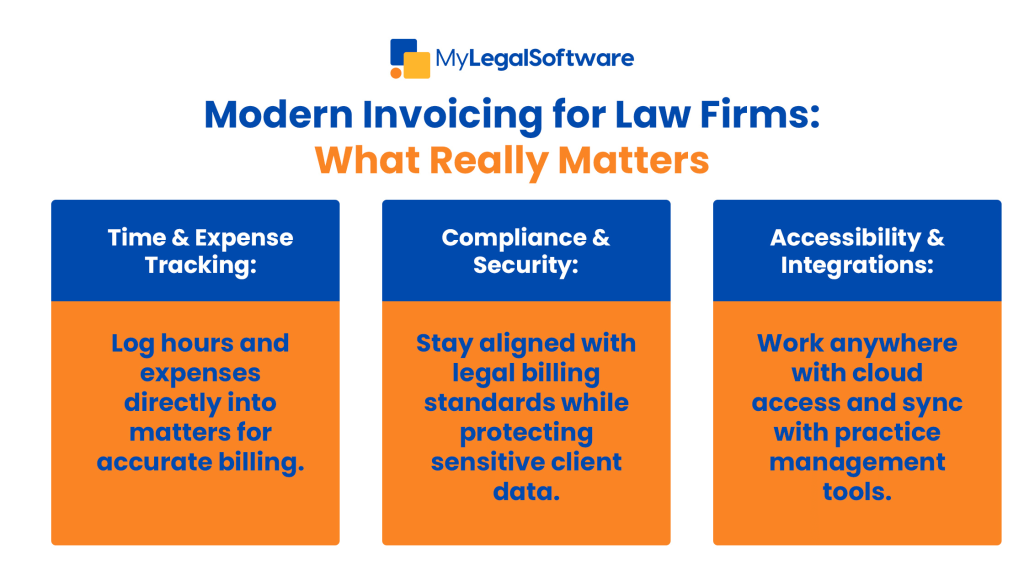
Today’s invoicing tools go far beyond sending bills. The best invoicing software for law firms is built specifically for the legal industry, combining billing functions with tools that support day-to-day practice.
1. Time Tracking
Instead of manually recording hours, modern systems let attorneys log billable time directly within case files. Expense tracking also integrates seamlessly, ensuring every reimbursable cost is accounted for. Together, these features create accurate, matter-based billing.
2. Compliance
Law firms face stricter requirements than most businesses. Generic billing software doesn’t always align with those standards. Legal invoicing platforms often include built-in compliance checks and safeguards against accidental overbilling, protecting both firms and clients.
3. Accessibility
With cloud-based platforms, attorneys can review invoices, approve time entries, or send bills from any device, whether in the office, at court, or working remotely. Multi-device syncing ensures partners, associates, and staff always see the most up-to-date billing information.
Law firm invoicing tools clearly offer more than generic options. Business invoicing software might be sufficient for freelancers or small businesses. Law practices require more. Invoicing software for law firms is designed to handle the complexity of legal billing without compromising accuracy or client trust.
How to Match Software Features to Your Firm’s Size
Not all firms have the same billing needs. A solo immigration attorney may prioritize affordability and quick setup, while a 20-attorney litigation practice may need multi-user access and detailed reporting. Choosing the right invoicing software for law firms means matching features to your practice’s size, growth stage, and practice area.
-
Invoicing software for small law firms
Smaller firms often need tools that are simple to set up and easy to use. Invoicing software for small law firms typically emphasizes affordability, straightforward interfaces, and fast onboarding.
Many solutions offer pre-built invoice templates and automated reminders, helping you spend less time on billing and more time on client work. The right system ensures small practices don’t sacrifice professionalism simply because of limited resources. -
Invoice software for a multi-user law firm
Larger practices require systems that support collaboration across multiple attorneys, paralegals, and support staff. Invoice software for multi-user law firm setups allows team-based access, role permissions, and centralized oversight.
Multiple timekeepers can log their hours simultaneously without creating inconsistencies. This ensures transparency across departments while giving managing partners the ability to track firm-wide billing performance in real time. -
Growth potential
Even if your firm is small today, choosing software that scales is a smart move. Many platforms allow firms to add users, expand storage, and integrate new modules as the caseload grows. This prevents the headache of switching systems down the road.
Scalable invoicing software also adapts to evolving billing needs. This may mean transitioning to flat fees, hybrid billing, or handling higher volumes of complex cases.
Security, Integrations, and Client Experience
Billing data is one of the most sensitive types of information a law firm handles. Confidential client details, payment methods, and case-linked expenses must be protected at all times.
The best invoicing software for law firms prioritizes security with encryption, role-based access, and secure cloud storage to minimize risk. This safeguards your firm against data breaches and ensures clients trust your billing process.
Standalone invoicing tools can create unnecessary extra work, while integrated platforms connect directly with practice management software, accounting systems, and even digital calendars. This means attorneys can link billing with case deadlines, expense reports, and trust accounting without juggling multiple systems.
Client-facing features matter more than ever. Clear invoice design, easy-to-understand breakdowns of services, and online payment options improve the client experience. When clients can pay securely with just a few clicks, collections speed up and disputes decrease.
Balancing Cost with Value
Every law firm weighs costs before committing to new software. Many invoicing platforms follow subscription-based pricing, either per user or per firm. While cost is an important consideration, the value of time saved, and accuracy gained often outweighs the monthly fee.
Think of the hours recovered when attorneys no longer chase missing time entries or dispute billing errors. That time converts into billable work and faster collections. Reducing billing disputes alone can justify the investment, since fewer conflicts mean stronger client relationships.
On the other hand, sticking with outdated or manual invoicing can cost you a lot. Delayed payments, lost billable hours, and administrative burnout can cost firms far more than a software subscription. The return on investment lies in efficiency, accuracy, and client trust; three areas that directly affect profitability.
Choosing the Right Billing Partner for Your Firm
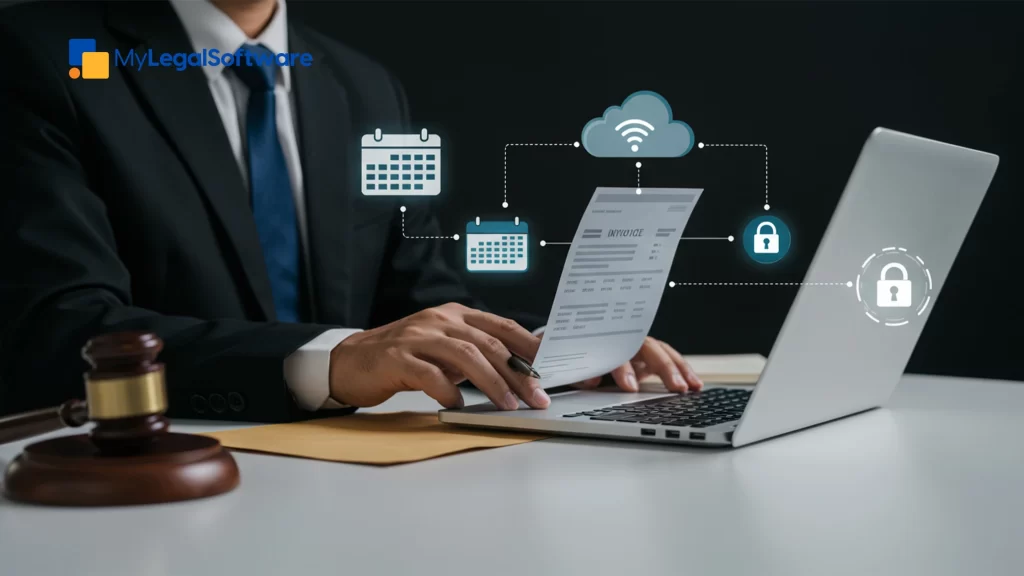
The best invoicing software for law firms doesn’t just generate bills; it aligns with your firm’s size, workflow, and long-term goals. By focusing on security, integrations, and client-facing features, you can find a tool that reduces administrative strain while boosting client confidence.
For immigration attorneys and general practitioners, MyLegalSoftware offers an especially strong option. Beyond invoicing, it combines billing with case management, document handling, and a built-in digital calendar, creating a complete system for everyday practice. MyLS is designed to grow with your firm while keeping sensitive client information secure.
The best way to judge is to try it in practice. Use MyLs on a 14-day free trial and see how the right system helps your legal practice.
Frequently Asked Questions
What makes invoicing software for law firms different from standard business tools?
It’s designed with legal billing standards in mind, including matter-based billing, compliance checks, and trust accounting features.
Is invoicing software for small law firms affordable?
Yes, many platforms are built for affordability and ease of use, offering professional billing without overwhelming costs.
How does invoice software for a multi-user law firm handle team billing?
It supports multiple timekeepers, role permissions, and centralized oversight, ensuring consistency and transparency across the firm.
How secure is cloud-based invoicing software for law firms?
Top providers use encryption, role-based access, and secure cloud storage to keep sensitive client billing data protected.