

A potential client called your office last Tuesday. They left a voicemail outlining their case. It sounded promising- solid facts, a clear legal issue, exactly the type of matter you handle well. Your paralegal had planned to call back that afternoon but was pulled into an emergency filing.
By Thursday, when someone finally returned the call, the potential client had already hired another attorney. This happens more often than you think. You’re losing clients, not because your legal skills aren’t strong enough, or because your rates are too high.
You’re losing them because client intake at your law firm isn’t capturing leads fast enough. Poor intake processes cost you valuable cases before you even get a chance to show what you can do.
A strong intake process doesn’t just capture contact information. It builds trust from the very first interaction. It shows potential clients you’re organized, responsive, and ready to help.
Why Intake Is the Cornerstone of Every Thriving Firm
Client intake is more than filling out forms and collecting retainer fees. It’s the first impression clients get of your professionalism and how much you care about their situation. That initial phone call or email response sets expectations for everything that follows.
Think about the emotional state of someone reaching out to an attorney. They’re stressed and confused about their legal situation. They’re worried about cost and outcomes. How you intake clients during this vulnerable moment matters enormously.
Speed shows you take them seriously. Empathy shows you understand their concerns. Clarity shows you know what you’re doing. Many attorneys underestimate this stage. They focus energy on winning cases and building expertise.
But intake is where long-term loyalty begins. A client who feels heard and valued from day one becomes your best referral source. They remember how you made them feel before you even took their case.
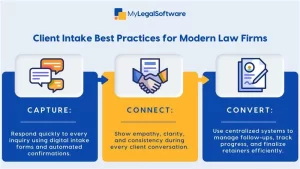
Designing an Efficient Law Firm Intake Process
A structured process for law firm intake looks like this. Clear roles are established for everyone to know who handles initial inquiries.
Consistent scripts so your team delivers uniform information about your services. Well-documented steps, to ensure nothing falls through the cracks between initial contact and case opening.
Start by standardizing your intake forms. Every potential client should provide the same core information. Contact details, case summary, urgency level, and how they found you. Digital forms work better than paper because the information flows directly into your case management system.
Create call scripts for your staff, not rigid word-for-word scripts that sound robotic. Flexible guidelines that ensure key questions get asked, and important information gets shared. Train everyone who answers phones on these protocols.
Digital follow-ups matter too. Automated confirmation emails after someone fills out your intake form. Reminder texts before scheduled consultations. These touchpoints keep potential clients engaged while you’re preparing to meet with them.
Track your metrics. How many leads contact you each month? How many convert to actual clients? What is your average response time? How long does the intake process take, from initial contact to signing the retainer?
By tracking these numbers, you can improve and make the process more efficient.
Key Best Practices to Strengthen Your Legal Client Intake
Certain practices separate firms that convert leads consistently from firms that lose them constantly. Response speed matters most. Respond to new inquiries within hours, not days. Studies show potential clients contact multiple attorneys when they need help. The first firm to respond professionally often wins the case.
Use template responses for common questions. This ensures consistency across your team. Someone asking about your immigration services gets the same accurate information regardless of who responds. Templates save time while maintaining quality.
Train your staff to listen actively during intake calls. They should gather details accurately without rushing. They should ask clarifying questions. They should note any urgency or special circumstance. Active listening makes clients feel valued.
Always confirm the next steps clearly. After an intake call or consultation, the potential client should have a clear understanding of what happens next. When you will contact them, what documents they need to provide, and what decisions they need to make. Clarity prevents confusion and keeps the momentum going.
Automated systems should sound human and empathetic. Technology helps you move faster. But legal client intake still requires a personal touch. Your automated emails should feel like they came from a real person who cares, not a robot.
Avoiding Common Intake Mistakes That Cost You Clients
Delayed follow-ups kill more potential cases than anything else. When someone waits three days for a callback, they assume you’re too busy for their case. They hire someone more responsive.
Missing documents creates frustration. If you need specific paperwork from a potential client, inform them of this requirement upfront with an explanation of why you need it. Make it easy to provide and avoid surprising them later with unexpected requests.
Inconsistent communication confuses people. If one staff member tells them something different than another, they lose confidence in your firm. Everyone should deliver the same message about your services, fees, and process.
Poor data entry causes problems downstream. When intake information gets entered incorrectly into your system, it creates confusion throughout the case. Standardized forms and quality checks prevent this.
Review your client intake process at your law firm quarterly by asking questions like: What’s working? What’s causing bottlenecks? Where are potential clients dropping off? Regular audits help keep your system efficient as your practice grows and evolves.
Centralized systems solve many intake problems. When all your client information is stored in one platform rather than being scattered across emails, voicemails, and paper files, nothing gets lost. Your entire team can see what stage each potential client is at, and how their inquiry is being handled.
Turning Intake into Long-Term Relationships
Effective intake isn’t just about converting more leads. It’s about building a foundation for retention and reputation. Clients who feel valued from their first interaction become loyal advocates for your practice. They return when they need help again. They refer friends and family, and leave positive reviews.
This is where the right tools make all the difference. MyLegalSoftware helps immigration attorneys and general practitioners handle intake seamlessly while managing every stage that follows.
MyLS organizes all client information from first contact through case resolution. It tracks details, schedules follow-ups, and centralizes communications, so you don’t miss anything.
Try MyLegalSoftware free for 14 days and experience how smoother intake processes can strengthen your entire law firm.

Frequently Asked Questions
What is the most important step in the client intake process?
The speed of the initial response. Potential clients contact multiple attorneys, and the first firm to respond professionally and promptly usually wins the case.
How fast should I respond to new client inquiries?
Within hours, not days. Ideally, within the same business day. Quick responses show you take potential clients seriously and have the capacity to handle their case.
What tools can help streamline intake for busy law firms?
Digital intake forms, automated confirmation emails, centralized case management systems, and templated responses for common questions all improve efficiency while maintaining quality.
How can I make sure intake feels personal even when automated?
Write automated messages in a warm, conversational tone. Include the person’s name. Acknowledge their specific situation. Technology should support personal connection, not replace it.