

On a busy afternoon, senior associate Jenna opened a drawer and discovered three versions of the same client intake form, two separate billing spreadsheets, and a folder labeled Work in Progress. She then spent the next hour reconciling conflicting dates and chasing a missing time entry.
Now, imagine not having to go through all of that. Imagine if your law firm could capture every client interaction, billable minute, and document in one place, so you did not waste time on avoidable mistakes? That is precisely the kind of problem a thoughtful business plan anticipates and solves.
A solid law firm business plan does more than outline goals. It defines operations, builds accountability, and ensures your firm runs efficiently, especially when integrated with the right legal software.
Why Many Law Firm Business Plans Fail
A business plan is the backbone of any successful practice, but many lawyers approach it as a formality. Without a clear strategy, firms risk poor financial management, inefficient workflows, and wasted resources.
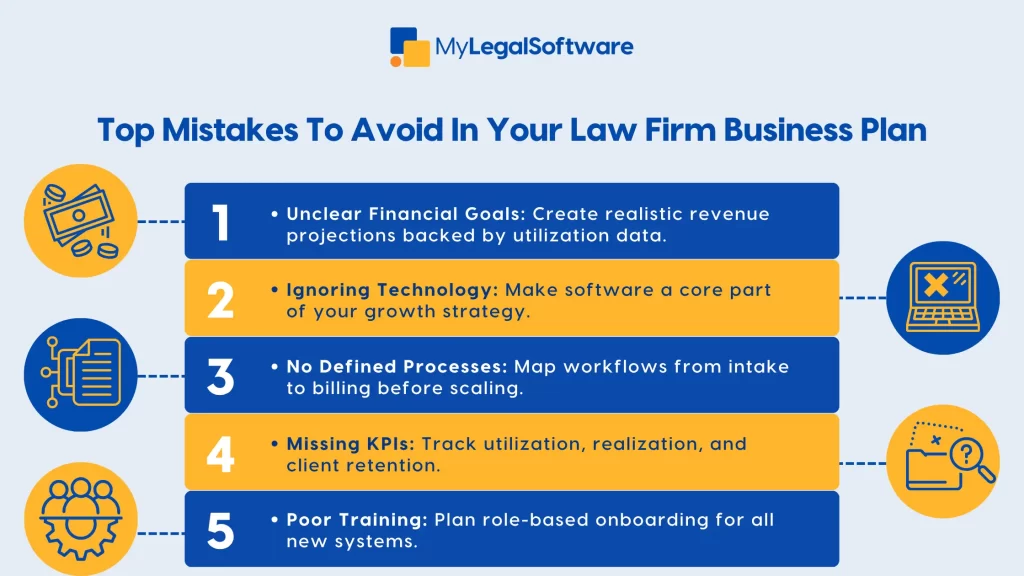
Below are the most common mistakes lawyers make when writing a business plan and how to avoid them using practical steps and technology.
-
Poor Financial ForecastingandUnrealistic Goals
Many plans include optimistic projections but lack supporting data. A strong plan should show how revenue targets will be achieved, not just what they are.
How To Fix Financial Projections
- Base projections on real utilization and realization rates.
- Model conservative, base, and optimistic scenarios.
- Include a three-year cash flow forecast that covers software subscriptions, onboarding, and contingency reserves.
Financial realism helps secure partner confidence and prevents mid-year surprises.
-
Treating Technologyasan Afterthought
Technology drives modern legal operations. Yet many firms relegate it to a budget footnote instead of a strategic advantage. Ignoring legal software results in fragmented data, missed time entries, and slow client communication.
What To Include About Software in Your Plan
- Core Functions: Case management, time tracking, document automation, and client portals.
- ROI Indicators: Reduced turnaround times, increased billable hours, and fewer missed deadlines.
- Implementation Costs: Include subscriptions, data migration, and staff training.
With platforms like MyLegalSoftware, firms can centralize billing, automate workflows, and measure real-time performance against goals.
-
Overlooking ProcessandStaffing Needs
A business plan that solely focuses on marketing and revenue overlooks how work gets done. Without mapping workflows and capacity, growth targets are unrealistic.
Streamlining Workflows
Document how cases move from intake to closure. Identify bottlenecks and manual tasks that software can automate. For example, automated time capture and document templates can save hours each week.
Planning For Realistic Capacity
Account for the entire team, including attorneys, paralegals, and support staff. Model utilization rates reflect non-billable activities, such as meetings, training, and compliance reviews.
-
Skipping Measurable KPIs And Continuous Evaluation
General statements like “increase efficiency” or “grow revenue” mean little without metrics. A well-defined law firm’s business plan uses data to measure success.
Key KPIs To Track
- Utilization and realization rates
- Client retention and referral rates
- Average matter profitability
- Days sales outstanding (DSO)
Regularly track these KPIs within your legal software dashboard. This turns your plan into a living document that evolves with your firm.
-
Ignoring Implementation and Training
Even the best plan fails without structured execution. Many firms purchase new tools or set goals but never build a roadmap for rollout.
Phased Implementation Approach
- Start Small: Deploy core case management and time tracking first.
- Add Gradually: Integrate billing, document automation, and reporting.
- Measure Impact: Use pre-set KPIs to gauge adoption and ROI.
Training And Change Management
People, not tools, determine success. Provide role-based training, create internal champions, and encourage feedback loops. Continuous learning ensures long-term adoption and efficiency.
-
Forgetting Security, Compliance, And Client Experience
Client trust is the foundation of legal work. Plans that ignore security and communication risk reputational damage.
Protecting Data and Compliance
When selecting vendors, confirm they provide data encryption, audit trails, and trust-accounting compliance. MyLegalSoftware offers built-in safeguards that meet industry standards.
Prioritizing Client Experience
Be sure to include retention strategies in your plan. Tools such as user portals, automated updates, and satisfaction surveys help keep users informed, build trust, and encourage client loyalty.
Putting It All Together
Avoiding these common mistakes transforms your networking platform business plan from a static document into a dynamic growth strategy. A strong plan should combine financial realism, operational clarity, measurable KPIs, and technology that simplifies daily work.
Modern firms that integrate cloud-based software save time, reduce errors, and improve collaboration, while maintaining client trust and profitability.
Conclusion and Next Step
Building a great business plan for lawyers goes beyond goals. It’s more about the execution of these goals and the systems that support them. By addressing the pitfalls above and aligning your plan with intelligent tools, your firm can scale confidently and sustainably.
Cloud-based practice management software like MyLegalSoftware helps you centralize operations, reduce administrative burdens, and focus on billable work and client satisfaction.
Schedule a free demo today to see how MyLegalSoftware can transform your firm’s workflow and bring your business plan to life.

Frequently Asked Questions
- Why is having a business plan important for a law firm?
A business plan for lawyers gives your firm a clear roadmap for operations, growth, staffing and financial targets. Without it you risk unclear goals, under-resourced workflows and missed opportunities.
- What is a common financial mistake in a law firm business plan?
One common mistake is setting optimistic revenue projections without realistic assumptions or basing them on historical utilization and costs. That leaves the plan unrealistic and hard to execute.
- How does neglecting technology or workflows hurt the business plan?
If you ignore how cases, time tracking, billing and documents are managed, your plan won’t support growth. Technology and workflows are central to modern legal practice and need to be built into the plan.
- What key metrics should a law firm include in its business plan?
Your plan should define measurable KPIs like utilization rate, realization rate, average matter value, client retention and days sales outstanding. These let you track whether you’re achieving the plan.
- How often should a law firm revisit its business plan?
A business plan is a living document. You should review and adjust it at least quarterly to reflect changes in your market, staffing, technology and financials—so you won’t be stuck with an outdated strategy.