You have three contract revisions due by Friday, and each one needs a careful review. Key clauses are buried in standard language, there is version confusion across multiple drafts, renewal dates need to be tracked, and some obligations extend months or even years beyond signing.
Contract work drains time even when you’re experienced. You know what to look for. You understand the risks, but reviewing every word of every contract takes hours you don’t have. The pressure to handle more contracts with less margin for error keeps increasing.
This is why contract management machine learning is entering conversations at law firms. Not as a replacement for attorney judgment, but as support for work that’s more tedious than it needs to be.
Why Contract Work Is Still More Manual Than It Should Be
Contracts quietly consume attorney hours in ways that never show up accurately on timesheets. You read, compare versions, check dates, flag obligations, and track renewals. Each task is manageable alone, but collectively across dozens of contracts, they become overwhelming.
The risks lie in routine review and lifecycle oversight: missed renewal dates, overlooked termination clauses, and obligations that go untracked until they become problems. These aren’t dramatic failures, but small oversights with significant consequences.
Traditional contract workflows don’t scale. What works for five contracts a month will fail at fifty. Manual tracking breaks down. Memory isn’t reliable. Spreadsheets become unmanageable. Technology is reshaping what clients and firms expect from contract management.
What Contract Management Machine Learning Actually Does
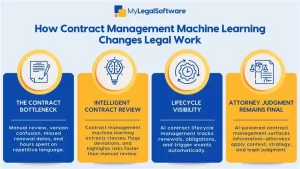
Machine learning in contract workflows handles pattern recognition that humans find tedious. It extracts clauses systematically. It identifies renewal dates and obligation triggers. It flags language that deviates from standard terms you’ve approved previously.
Contract management of machine learning doesn’t make legal decisions. It surfaces information, so you can make better decisions faster. It highlights what needs attention. You still review. You still approve. You still apply legal judgment to every substantive issue.
Think of it as intelligent highlighting, rather than automated decision-making. The technology reads faster than you can, but it doesn’t understand the context the way you do. That’s why attorney oversight remains essential.
The Shift from Static Documents to Living Contract Systems
Contracts aren’t one-time documents. They’re ongoing obligations that extend across months or years. There are renewal dates. Performance obligations are triggered at specific milestones. Termination rights activate under certain conditions. These elements need tracking throughout the contract lifecycle.
AI contract lifecycle management transforms how firms monitor these ongoing requirements. Instead of the calendar reminders you manually set, systems track contract obligations automatically. Alerts notify you when renewal windows open. Risk flags surface when contract terms approach triggering events.
This matters more as firms manage higher contract volumes. When you’re tracking five contracts mentally, manual systems work. At fifty contracts, automation becomes essential for avoiding missed obligations.
How AI Changes Attorney Decision-Making, Not Authority
Machine learning reduces cognitive load without removing control. You still decide the contract strategy. You still negotiate terms. You still approve the final language. However, you spend less time on mechanical review tasks.
Faster review enables better client responsiveness. Stronger consistency means your work product maintains quality across all contracts. Fewer missed issues protect both you and your clients from oversights that cause problems later.
Artificial intelligence in contract lifecycle management supports your expertise rather than replacing it. Technology can’t exercise judgment. It can’t understand the commercial context. It can’t navigate relationship dynamics in negotiations. Those capabilities remain uniquely human and uniquely yours as the attorney.
Where Firms See the Biggest Gains
You save time during review. What took three hours now takes less than an hour. You’re reading highlighted sections instead of every word of boilerplate you’ve seen fifty times.
Fewer missed renewals or obligations protect client relationships. Automated tracking catches dates your manual system would have missed. Clients appreciate proactive reminders about approaching deadlines.
Better client responsiveness follows naturally. When contract review takes less time, you can turn around drafts faster. When lifecycle tracking happens automatically, you can update clients proactively. AI-powered contract management removes bottlenecks that slow client service.
Position machine learning as a support system, not an automation theater. It handles tedious tasks, so you focus on substantive legal work. That’s the actual value, not fantasies about artificial intelligence practicing law independently.
Why Contract Intelligence Needs Integration
Contracts don’t exist in isolation. They connect to client matters, case timelines, and compliance obligations. When contract management lives separately from your other legal work, you’re manually bridging gaps between systems.
An AI contract management system works best when integrated with broader practice management. Contract obligations feed into case calendars. Client communications reference contract terms. Billing reflects contract review time. Everything connects instead of existing in silos.
This integration is why contract management machine learning delivers maximum value inside comprehensive platforms rather than as standalone tools. Your contract work is part of larger client relationships and legal matters. Technology should reflect that reality.
Smarter Contract Work Without Losing Control
The future of contract work is augmented, not replaced. You’ll review contracts faster. Track obligations more reliably. Serve clients more responsively. But you remain the professional, making every substantive decision.
ImmigrationQuestion.com’s case management software helps attorneys manage all aspects of their practice from first client contact through resolution. While contract management machine learning represents the future of certain legal workflows, the foundation remains comprehensive platforms that support how you practice.
Ready to experience how integrated systems improve legal work? ImmigrationQuestion.com offers a 14-day free trial. See how modern case management supports both traditional legal work and emerging technologies that make specific tasks more efficient.

Frequently Asked Questions
What is contract management machine learning in legal practice?
Technology that uses pattern recognition to extract clauses, identify obligations, track deadlines, and flag deviations from standard language, supporting attorney review without replacing judgment.
Does machine learning replace attorney judgment in contract review?
No. It surfaces information faster so attorneys can make better decisions more efficiently, but substantive legal judgment remains entirely the attorney’s responsibility.
How does AI improve contract lifecycle tracking?
Automated monitoring of renewal dates, obligation triggers, termination rights, and performance milestones throughout a contract’s duration, reducing missed deadlines and overlooked requirements.
Is AI-powered contract management suitable for small firms?
Yes. Small firms often benefit most because they lack the administrative support to manually track contracts. Technology provides capabilities that larger firms achieve through dedicated staff.