

It’s 7:30 p.m., and you’re still in the office. Your inbox is filled with follow-up emails, a client is waiting for an update, and half the team hasn’t logged in their case notes yet. You know the work is getting done, but you can’t quite tell where each case stands. The deadlines are creeping closer, and frustration is building.
This is the quiet tension inside many firms. What happens when accountability becomes optional?
The truth is, firms that grow sustainably have one thing in common: a strong legal accountability culture. It’s not about strict oversight or pressure. It’s about building clarity, responsibility, and follow-through at every level. When you can see who’s doing what, when, and why- you create ownership, and that’s where accountability begins. Case management tools are the bridge that turns that intention into reality.
Why Accountability Is the Missing Link in Firm Growth
When a firm lacks accountability, it shows in missed court dates, repeated mistakes, and frustrated clients. However, accountability isn’t just about meeting deadlines; it’s about aligning every person on the team toward a shared standard of excellence.
You’ve probably seen how easily tasks get missed when visibility is low. A file gets misplaced, an update isn’t logged, or a client’s follow-up is delayed. These aren’t just administrative issues; they’re signs of a structure that’s missing clarity.
That’s where case management accountability tools make the difference. They create a transparent system where every case, document, and task is visible. You can see where progress is stalling, where support is needed, and how resources are being used. These insights don’t just make your firm more efficient; they make your team more confident.
When accountability becomes measurable, it stops being a burden and starts becoming a source of motivation. Attorneys know exactly what’s expected of them and can take pride in meeting those standards.
How to Build Law Firm Accountability from the Ground Up
Creating a culture of accountability isn’t a one-time initiative. You build it, one policy, one habit, one transparent process at a time. Here’s how to build law firm accountability that lasts:
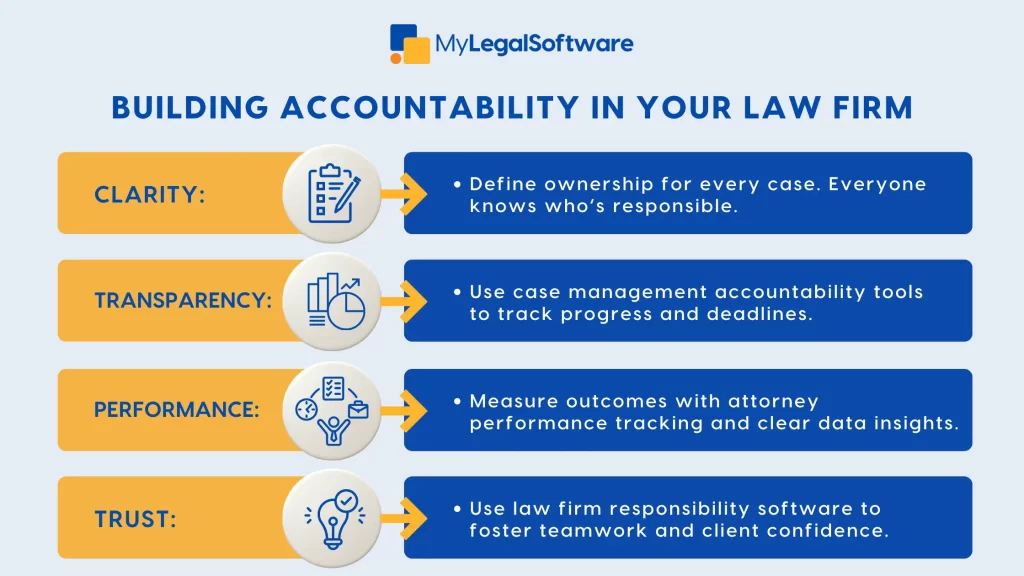
Step 1: Define clear ownership for every case or client matter
If everyone is responsible, no one is accountable. Assign clear ownership for each client file, motion, or follow-up. Ownership brings focus, and focus drives action.
Step 2: Set measurable performance indicators
Forget the old “billable hours” mindset as your only metric. Instead, measure quality, responsiveness, and client satisfaction. Those are the real indicators of performance that foster growth.
Step 3: Integrate transparent tech tools
When you rely solely on verbal updates or spreadsheets, things get lost. Integrate digital systems that allow attorneys to collaborate in real time, share progress updates, and document actions.
When you do these three things consistently, accountability stops feeling like a checklist. It starts becoming part of your culture; something that builds trust rather than pressure. That’s how strong teams thrive.
Tracking Performance Without Micromanagement
Accountability often gets confused with micromanagement, but they’re different. Micromanagement kills motivation; accountability builds it.
Through attorney performance tracking, you can identify patterns that reveal where improvements are needed without constant supervision. You’re not looking over your shoulders; you’re looking at data. That data can show workload balance, efficiency gaps, and even client outcomes.
Dashboards and automated reports simplify what used to take hours. Instead of chasing updates, you can open a single view to see which cases are progressing smoothly and which need attention. That transparency empowers your team to take the initiative.
This type of performance tracking also builds client trust. When clients see consistent communication and progress, they feel secure, and that leads to referrals, retention, and growth. True accountability isn’t about control. It’s about clarity.
Using Responsibility Software to Strengthen Team Trust
In today’s digital world, law firm responsibility software has become the backbone of high-performing legal teams. It removes the guesswork from collaboration. Every task, deadline, and communication has a clear trail, which means no more confusion about who’s responsible for what.
This kind of system helps reduce finger-pointing and promotes shared success. When results are visible, teams work together with confidence. The right platforms can also foster accountability with technology by offering features like shared dashboards and smart reminders that keep your firm’s workflow consistent.
Combined with legal team performance software, responsibility tools allow you to review cases holistically, without overwhelming your staff. Add in attorney productivity monitoring and case tracking tools for lawyers, and you have a complete ecosystem that supports an accountability culture that law practices rely on.
The real goal isn’t to track every click; it’s to create transparency that builds trust. When everyone sees progress clearly, accountability becomes a team value, not a management demand.
Turning Accountability into a Culture
Accountability doesn’t just improve processes; it shapes your reputation. When your team follows through, clients notice. When your systems align, performance grows naturally.
That’s why many firms are turning to tools that make accountability part of their daily routine. MyLegalSoftware (MyLS) is one such platform built for immigration attorneys and general practitioners who want better control and visibility over their cases.
With MyLS, you can assign tasks, track progress, and ensure every team member knows what they’re responsible for, from the first client contact to the final resolution. It’s designed to strengthen collaboration and eliminate the common gaps that slow firms down.
If you’ve been searching for a reliable case management solution, try MyLS free for 14 days. You’ll see how it transforms your workflow and fosters real accountability across your firm. When your systems support accountability, excellence follows naturally.

Frequently Asked Questions
Why is accountability so critical in a law firm?
Accountability ensures consistency and reliability. When every attorney takes ownership, deadlines are met, communication improves, and clients feel valued. It’s the foundation for sustainable growth.
How do case management tools improve attorney accountability?
They provide visibility. Everyone can see task assignments, progress, and deadlines in one place. This shared transparency encourages responsibility and eliminates confusion.
What’s the difference between tracking performance and micromanaging?
Tracking performance focuses on outcomes and efficiency, while micromanaging focuses on control. Performance tracking empowers attorneys by showing data-based insights, not by dictating every move.
Can accountability software help small firms?
Absolutely. Smaller firms often benefit even more because they gain structure and clarity that supports scaling. Accountability tools help distribute work evenly and maintain consistency.
What features should I look for in accountability-focused case management tools?
Look for task tracking, document management, team dashboards, deadline reminders, and reporting analytics. These features create a clear line of sight from task to outcome.