
Law firms don’t only lose money because of client churn or difficult cases. Sometimes, the loss comes from something as simple as not finding the right document in time or dealing with a confusing filing system.
That disorganization has a price. And for most firms, it’s much higher than they realize.
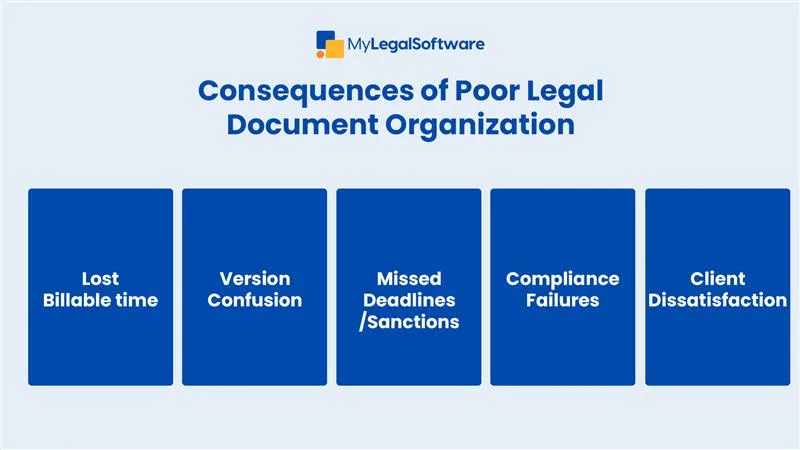
The Cost of Disorganization
-
Reduced Billable Hours
Every minute spent digging through folders, renaming files, or confirming if a document is current is lost revenue.
A McKinsey report found that professionals spend nearly 20% of their week searching for information. In law firms, wasted time means lost billable hours.
Imagine this:
- An attorney charging $200/hour spends 30 minutes a day looking for misplaced documents, which is $100 gone every single day.
- Across 10 attorneys, that’s $1,000 lost daily.
- Over a year? That is more than $300,000 in revenue lost.
-
Confusion & Miscommunication
Confusion is unavoidable when everyone names files differently or organizes them based on individual preferences.
- Work gets duplicated.
- Emails with attachments create multiple versions.
- No one knows which draft is the final one.
IDC research shows 21.3% of productivity loss comes from document version issues.
Imagine submitting an outdated contract by mistake. That can mean sanctions, malpractice risks, or losing a case you should have won.
A legal case management system, like MyLegalSoftware (MyLS) eliminates this chaos. Version control ensures that everyone works on the correct file every time.
-
Missed Deadlines
Poor document management means missed deadlines. And in legal practice, one missed deadline can ruin a case.
A law office document management system lets you set reminders and keep all stakeholders in sync, which reduces missed deadlines.
-
Compliance Issues
Confidentiality isn’t optional in law. But without proper systems, compliance slips through the cracks.
In 2023, the American Bar Association found that 29% of law firms experienced a security breach.
The fallout for a security breach includes:
- Financial penalties.
- Lost trust.
- Damaged reputation.
A secure legal document organization system protects your firm with encryption and access controls. Only the right people have access at all times.
-
Onboarding Issues
New hires who should start adding value waste weeks asking questions like: Where do I find this or that agreement?” Or “Which version do I use?“.
That’s time lost. And it slows down the entire team.
-
Reputational Damage
Clients notice when your firm seems disorganized. Missed deadlines, slow responses, and wrong drafts all add up to broken trust. And once trust is gone, clients start looking for other attorneys.
The good news is that you can build client loyalty with proper law firm file management.
The Solution
It starts with a structure that works for everyone:
- Clear folder hierarchy by case type.
- Standardized naming conventions.
- A legal file tracking system that adapts to your workflow.
- Automation for document routing and reminders.
When you improve document access, things change:
- Teams align.
- Cases move faster.
- Stress drops.
- Profits rise.
Choose the Right System
If your firm is tired of fragmented systems and inconsistent filing, MyLegalSoftware (MyLS) is your go-to.
MyLS is a custom tool that brings order to legal records organization, streamlines workflows, and protects sensitive data. With MyLS, you can reduce lost files and improve document access in your law firm.
Start a free trial or schedule a demo today to see how MyLS can upgrade your file management system.

Frequently Asked Questions
What is law firm file management?
It’s the system your firm uses to organize, store, and access legal documents. Good law firm file management ensures attorneys always know where to find files, which version is current, and who has access.
How do poor file management costs add up for law firms?
The biggest loss comes from wasted billable hours. When attorneys spend time searching for documents instead of practicing law, revenue drops. Poor systems also increase risks of missed deadlines, compliance failures, and reputational damage.
What’s the best way to improve legal document organization?
Start with a clear folder hierarchy, consistent naming patterns, and rules for everyone to follow. Then invest in a case management system that automates version control.
Is a legal file tracking system better than email?
Email creates duplicate versions, which can be confusing. A proper legal file tracking system ensures that there’s one correct version of each file, with built-in audit trails and real-time collaboration capabilities.
How can law office document management software reduce lost files?
Software like MyLegalSoftware (MyLS) offers centralized storage and secure search features. That means no more digging through folders or lost client documents.
What are some law firm data management tips?
- Use standardized file names.
- Train your team on consistent practices.
- Automate reminders for deadlines.
- Control access with security settings.
- Regularly audit your system to keep it clean.
Why does legal records organization matter for compliance?
Regulators expect firms to protect client confidentiality. Poor file management leaves sensitive documents exposed. Organized systems with encryption and access controls lower the risk of breaches and penalties.