

You’ve spent 20 hours on a complex motion. You’ve answered client emails at midnight. You’ve negotiated settlements, filed documents, and protected your client’s interests. The legal work is done. Now comes the part nobody warns you about in law school: getting paid.
You send an invoice, and then the waiting begins. Weeks go by, you follow up, and the client comes back with questions about the charges. They’re unsure about certain entries, which further delays payment. All the while, your overhead keeps running. Repeat this across several clients, and before long, cash flow becomes a bigger challenge than the work itself.
The difference between quick payment and months of chasing clients often comes down to one thing. A clear, professional legal invoice that clients understand and trust. Let’s fix your billing process, so you get paid faster and spend less time on collections.
Why Your Billing Process Matters More Than You Think
Billing shapes more than just your bank account. It affects client trust, your firm’s cash flow, and long-term profitability. When clients receive confusing invoices, they question your value. When invoices arrive late or inconsistently, they wonder about your organization. When descriptions are vague, they hesitate to pay.
The hidden costs of unclear invoicing build up fast. Hours go into explaining charges, more energy slips away during payment disputes, and the stress of unstable cash flow becomes a constant distraction. Even strong client relationships can take a hit. In the end, your billing system either strengthens your practice or quietly erodes it.
What Makes a Strong Legal Invoice?
A legal invoice is more than a list of charges. It’s a professional document that clearly communicates the value you provided and makes payment straightforward.
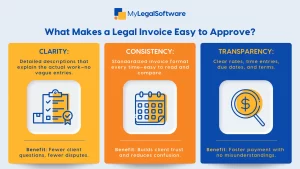
Essential elements include detailed descriptions of services rendered- not just “legal research” but “research regarding statute of limitations issues for breach of contract claim.”
Time entries, showing exactly when work was performed. Rate transparency, so clients understand your billing structure. Clear payment terms explaining accepted methods and any late fees. Specific due dates eliminate confusion about when payment is expected.
Include your contact information for billing questions. Add billing codes if your jurisdiction or client requires them. When you send a law firm’s invoice, expectations differ from generic bills. Clients expect professionalism, clarity, and justification for every charge.
The Hidden Challenges Attorneys Face with Invoicing
Clients question charges when descriptions lack detail. They delay payment when invoices feel vague or unexpectedly high. You face an administrative backlog when billing gets pushed to the month-end instead of happening continuously.
Disputes arise from descriptions like “communication with client” instead of “conference call regarding discovery strategy and witness preparation.”
Issuing a law office invoice carries unique pressures. You must meet ethical standards for billing. You need to maintain client trust while getting compensated fairly. You’re balancing professionalism with the reality that you need to get paid to keep practicing.
Best Practices for Creating Legal Invoices That Get You Paid Faster
Start with clear, detailed descriptions. Clients need to understand the value behind every charge. “Drafted motion for summary judgment” tells them more than “motion work.” “Reviewed and analyzed fifty pages of medical records” justifies time better than “document review.”
Standardize your billing format. Use the same structure for every invoice. Consistency builds trust and reduces disputes. Clients know what to expect and can compare invoices easily.
Automate repetitive tasks. Manual invoice creation wastes time and introduces errors. Automation ensures accuracy, speeds up the process, and lets you bill more promptly. The faster you invoice, the faster you get paid.
Set expectations early. Discuss billing rates during initial consultations. Explain your payment terms in retainer agreements. Clarify billing cycles so clients know when to expect invoices. Surprises cause payment delays.
Include client-friendly summaries. A brief overview at the top showing total hours, major activities, and amount due helps clients understand the invoice before diving into line items. Clarity prevents misunderstandings that delay payment.
How Technology Improves Your Billing Workflow
Modern software automatically tracks your time, generates invoices directly from those entries, and sends payment reminders without extra effort. It also offers secure client portals where clients can review their bills and pay quickly, helping you get paid faster.
When you send a law firm invoice through integrated software, it’s accurate, professionally branded, and easy for clients to pay. Technology eliminates the manual work that causes billing delays. You track time as you work instead of trying to remember what you did last week. Invoices are generated with one click instead of requiring an hour of data entry.
Create Legal Invoices That Support Your Practice
Structured billing isn’t just about getting paid. It’s about running a sustainable practice. Clear invoices strengthen client relationships. Efficient billing processes free up time for actual legal work. Faster payment improves cash flow and reduces financial stress.
MyLegalSoftware handles this seamlessly. MyLS is a comprehensive case management software that includes smart billing features built for immigration attorneys and general practitioners. Time tracking happens naturally as you work on cases. Invoice creation is automatic and professional.
Ready to see how much easier billing can be? Try MyLS free for 14 days and experience how proper systems transform your practice. When your invoicing works smoothly, you get paid faster and practice with less stress.

Frequently Asked Questions
What should a legal invoice always include?
Detailed service descriptions, time entries, billing rates, total amount due, payment terms, due date, and contact information for billing questions.
How do I reduce client disputes over my law firm invoices?
Use specific descriptions that show value, bill promptly while work is fresh, set clear expectations upfront, and maintain consistent formatting that clients can easily understand.
Is it better to automate my billing process?
Yes. Automation reduces errors, speeds up invoicing, ensures you don’t miss billable time, and lets you get invoices out faster, which means faster payment.
How often should a law office invoice be sent out?
Most firms bill monthly, though higher-volume or retainer arrangements may require different schedules. Consistency matters more than frequency.
What makes a legal invoicing system more effective than manual billing?
Integrated time tracking, automatic invoice generation, payment reminders, reduced errors, faster processing, and a professional presentation that clients trust.