

Starting a law firm in 2025 with no money might sound unrealistic, especially when the traditional route seems to involve fancy offices, expensive software, and a fully staffed team. But here’s the truth: starting a law firm with no money is not only possible, it’s becoming increasingly common.
With the rise of virtual law practices, free or low-cost tech tools, and the shift toward leaner legal business models, it’s now more feasible than ever for new lawyers and solo practitioners to launch their own firms—even when you’re tight on funds.
This guide will walk you through how to start a law firm with little-to-no money, explore creative ways to fund the start of a law firm, and equip you with practical, real-world strategies to build your legal career without waiting on funding or office space.
Can You Really Start a Law Firm with No Money in 2025?
Yes, you absolutely can. The legal industry in 2025 looks nothing like it did a decade ago. Thanks to legal tech, changing client expectations, and a growing gig economy, solo and small law firms are thriving even when they begin with minimal resources.
What you truly need is:
- A law license in your practicing jurisdiction
- A clear niche or area of focus
- A plan to build visibility and deliver value
- The courage to start small and scale smartly
You don’t need a fancy office, receptionist, or ten different paid software tools from day one. Many of today’s successful firms started with a laptop, a smartphone, and a whole lot of hustle and you can find your way in that route strategically too.
Essential Legal Requirements You Still Need to Cover
While you can cut many costs, a few non-negotiables remain, even when starting a law firm with no money:
- Bar license: You must be in good standing with your state bar association.
- Business registration: Depending on your location, you may need to register as a sole proprietor, LLC, or LLP.
- Malpractice insurance: Often optional for solos but strongly recommended—even for pro bono cases.
- Client trust account (IOLTA): Required if handling client funds, though many banks offer low-cost options.
It’ll be helpful to know that some state bar associations offer new attorney grants, discounted fees, or startup resources—these could be really helpful, and it is important to not overlook them.
Free and Low-Cost Tools to Help You Launch Your Law Firm

Being low on finances doesn’t mean you can’t run a professional and organized law firm. Thanks to technology, you can set up your legal practice using free or low-cost tools that cover all the basics. Here’s a simple breakdown:
Legal Research
Legal research is the foundation of every case, but you don’t need to spend thousands on subscriptions. These tools help you access case law, legal opinions, and statutes without draining your wallet.
- Fastcase – Often included for free with your state bar membership.
- Casetext – A low-cost, AI-powered research tool trusted by many small firms.
- Google Scholar – Free to use and useful for finding case law, articles, and legal opinions.
Case & Document Management
Staying organized is critical, even if you’re working solo. These tools help you manage client files, track deadlines, and keep your practice running smoothly.
- MyLegalSoftware – Designed for small and mid-sized law firms, trial plans to manage cases and also task efficiently.
- Notion – A flexible workspace tool you can customize to manage tasks, client notes, timelines, and case files.
Contracts and Document Automation
Instead of drafting every document from scratch, these tools let you create templates and automate repetitive legal forms—saving time and reducing errors.
- Documate – Lets you build and automate custom legal document workflows.
- Lawyaw – Offers pre-built legal templates and automation to simplify document drafting.
Billing and Accounting
Tracking your income and expenses is essential, even as a solo practitioner. These tools help you handle invoicing, payments, and bookkeeping with ease.
- Wave – A completely free invoicing and accounting platform perfect for solo firms.
- PayPal Business – Convenient for sending invoices and accepting online payments.
- LawPay – Designed specifically for lawyers to manage trust accounting and comply with ethics rules.
Communication Tools
Staying connected to clients is a must and it doesn’t have to cost a thing. These tools help you maintain professional communication on a budget.
- Google Voice – Get a dedicated business number to keep work and personal calls separate.
- Zoom – Host virtual consultations or court hearings with clients and colleagues.
- Calendly – Share your availability so clients can book appointments without back-and-forth emails.
You don’t need thousands of dollars to get started, you just need the right tools and the willingness to make the most of what is available.
How to Get Clients When You Have No Money for Marketing
You don’t need a big marketing budget to land your first paying clients. In fact, some of the most effective client-getting strategies cost nothing, just your time, creativity, and consistency. Here’s how to attract clients even when you’re starting with zero money:
Build a Personal Brand on LinkedIn
Show up regularly by sharing helpful legal tips, answering common questions, and posting about your journey as a new firm owner. This positions you as a trustworthy expert in your niche, and keeps you top-of-mind when someone needs a lawyer.
Set Up Your Free Google Business Profile
This is a must-have. When someone nearby searches for a lawyer on Google (like “immigration lawyer near me”), your profile helps them find you. Make sure to include your location, area of practice, contact info, and client reviews if you can get them.
Write Educational Content That Answers Real Questions
Start a blog on your website or post helpful articles on LinkedIn. Focus on answering common legal questions in order to bring answers to your target audiences’ questions.
Also, educational and highly informative posts help build trust and improve your visibility across search engines.
Ask for Referrals from People You Know
Reach out to classmates, former colleagues, mentors, or even lawyers who don’t practice your niche. Let them know you’ve started your firm and are open to referrals. Most people are happy to help, especially if you’ve kept in touch or helped them in the past.
Get Involved in Your Community
Offer a free Q&A session at a local church, library, or online webinar. Educate people about legal issues that matter to them. These events create trust, spread the word about your services, and often lead to referrals and paying clients.
Even if you can’t afford ads or a marketing agency, you can still win clients by delivering real value. When you give useful information for free, people are more likely to trust you and eventually hire you when they need legal help.
Start where you are, use what you have, and focus on helping. The clients will follow.
How to Get Money to Start a Law Firm (If You Need Some Capital)
You don’t have to fund everything out of pocket. If there are essentials you truly can’t cover, there are creative and accessible funding options you can explore:
- Grants for new lawyers from bar associations, nonprofits, or legal startup programs
- Crowdfunding your legal vision through platforms like GoFundMe or SeedLegal
- Business credit cards or microloans (use sparingly and wisely)
- Startup competitions geared toward minority lawyers, solo founders, or legal tech innovators
- Fee-splitting partnerships with established firms or taking overflow cases
If you’re wondering how to get money to start a law firm, start by identifying what you truly need funding for, then research low-risk options to get there.
How to Create a Lean Business Plan for Your Law Firm in 2025
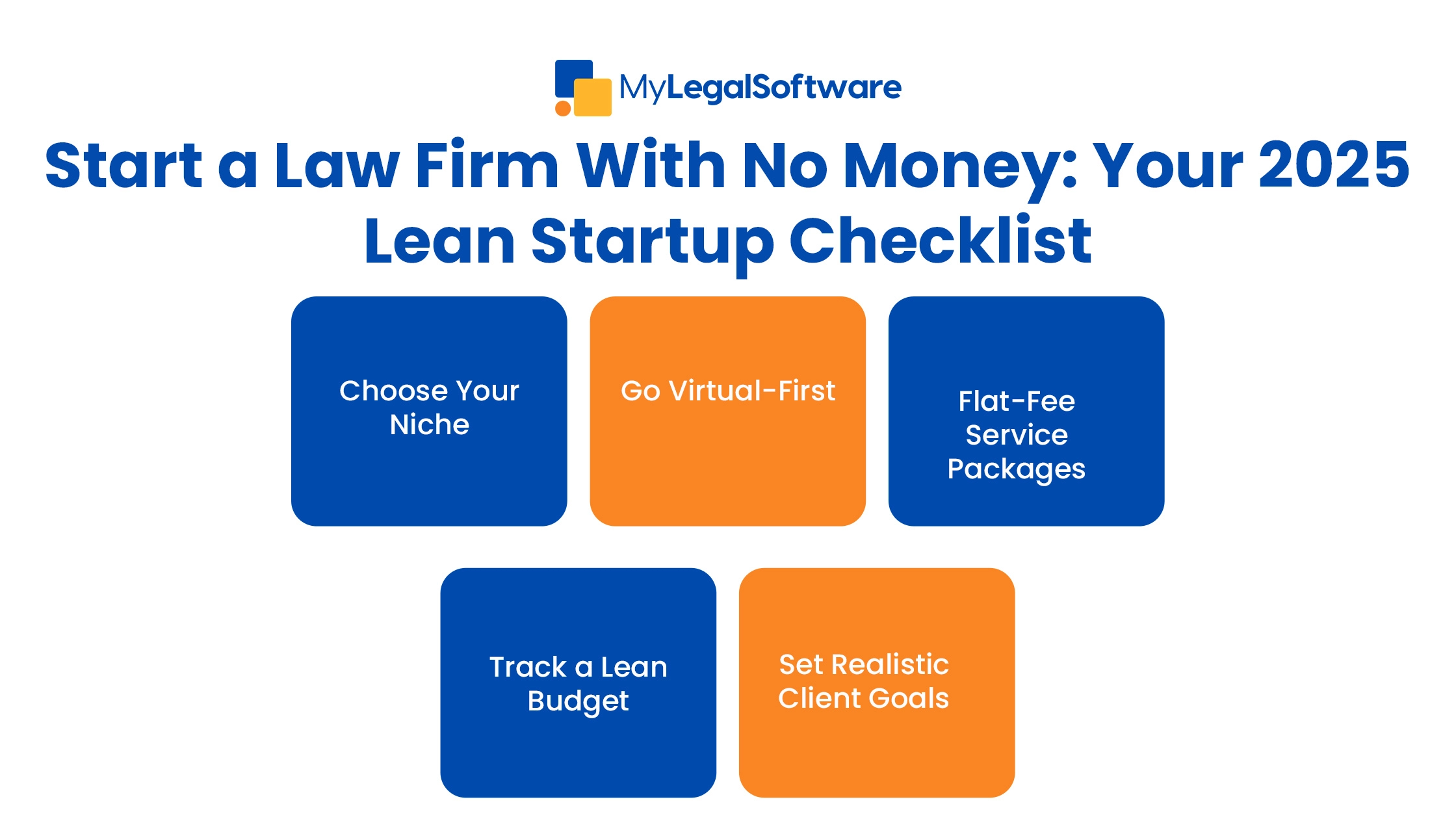
Starting a law firm with limited or no money doesn’t mean skipping the business plan, it just means keeping it lean and focused. This kind of plan helps you stay clear-headed, make smart decisions, and build a foundation you can grow from. Here’s how to shape yours:
Pick a Clear Niche
Instead of trying to handle every type of case that comes your way, choose one area of law you genuinely care about and have some knowledge or experience in—such as immigration, family law, estate planning, or startup legal services. Specializing early not only simplifies your marketing but also builds credibility faster. When people know exactly what you do, they’re more likely to trust and hire you.
Go Virtual-First to Cut Costs
You don’t need to spend thousands on office space to look professional. Running a virtual-first firm lets you cut down on overhead while still delivering quality service. Tools like Zoom for consultations, Google Drive for storing client files, and e-signature tools like DocuSign make it easy to operate remotely and efficiently. With today’s technology, clients care more about accessibility and results than physical office space.
Offer Service Packages Instead of Hourly Billing
For a new firm, clear and simple pricing builds trust quickly. Rather than hourly billing, consider creating flat-fee packages—like a “Basic Will Package” or a “Startup Formation Kit.” This helps potential clients understand what they’re paying for and reduces hesitation around booking your services. It also simplifies your own workflow and makes your offerings feel more professional and approachable.
Break Down Your Budget (Even If It’s Small)
Knowing your baseline operating costs helps you avoid unpleasant surprises. Write down everything you absolutely need to function each month—software subscriptions, malpractice insurance, bar dues, phone bills, and internet costs. Even if the list is short, having these numbers in front of you ensures that every financial decision you make is intentional and sustainable.
Set Small, Realistic Client Goals
When you’re just getting started, it’s easy to feel like you need a flood of clients to prove you’re successful. Instead, aim to land just one or two paying clients a month. This gives you time to build a reputation, create referral opportunities, and fine-tune your systems without feeling overwhelmed. Progress is progress, and steady growth often leads to better long-term results.
You don’t need a lengthy, formal business document to succeed. A lean business plan with a clear niche, a virtual structure, transparent services, and manageable goals—is more than enough to guide your steps. When you know where you’re headed and what you need to make it work, building a law firm becomes a lot more doable—even on a shoestring budget.
What Mistakes Should You Avoid When Starting With Little Or No Money?
Many new attorneys burn out or stall because of avoidable mistakes. Here’s what to avoid when you’re starting a law firm with no money:
- Spending on branding before building: You don’t need a custom logo or high-end website from day one. Focus on value.
- Neglecting financial tracking: Use Wave or a spreadsheet to track income and expenses. Every dollar matters.
- Avoiding legal disclaimers: Even if you’re broke, protect yourself with basic client agreements and engagement letters.
- Trying to do everything: Focus on 1–2 services you can do well. Don’t overextend early on.
Final Word: Starting Lean Isn’t Less Professional
Many of today’s most innovative law firms didn’t start with big budgets; they started with clarity, confidence, and a laptop in a coffee shop (probably). The legal world is changing, and lean startups like yours have the edge.
Yes, you can start a law firm with no money in 2025, and you can build something that’s modern, client-focused, and successful.
Need help running things smoothly from day one? MyLegalSoftware, a trusted case management software, offers flat-fee billing, automated workflows, and client portals—all designed to support lean, agile practices.
Start your free 14-day trial today and run your law firm smarter, not harder.