

In 2025, the role of plaintiff-side law firms is more important than ever. As powerful corporations expand their reach, individuals need attorneys who have the skills, strategies, and compassion to stand up and fight for them. Plaintiff lawyers do just that, championing clients impacted by negligence, fraud, discrimination, or abuse of power.
If you’ve been thinking about how to start a plaintiff’s law firm, there’s no better time. The need for civil trial attorneys who represent individuals, especially in personal injury, employment disputes, consumer cases, and class actions, is rising. Starting your own firm lets you set the tone, values, and strategy for the work that matters most to you.
This step-by-step guide breaks down how to start a plaintiff’s law firm from scratch. From identifying your niche to building your infrastructure and landing your first clients, we’ll walk you through it all.
Why are Plaintiff’s Law Firms Unique

Starting a plaintiff’s law firm isn’t just about launching a business; it’s about embracing a different way of practicing law. Unlike defense firms that charge by the hour, most plaintiff’s firms work on a contingency model. You only get paid if your client wins. It’s a model that demands strategic case selection, careful budgeting, and long-term vision.
The work is also deeply human. Cases often involve high-stakes situations—serious injuries, lost jobs, wrongful deaths. These aren’t just legal matters; they’re emotional ones. Your ability to empathize and build trust with clients will matter just as much as your ability to argue a case in court.
Client relationships are also different. You’re not just their attorney; you’re their guide, their advocate, sometimes even their support system. Understanding this mindset is key if you’re thinking about how to start a plaintiff’s law firm and thrive in it.
Laying the Groundwork and Planning Your Firm
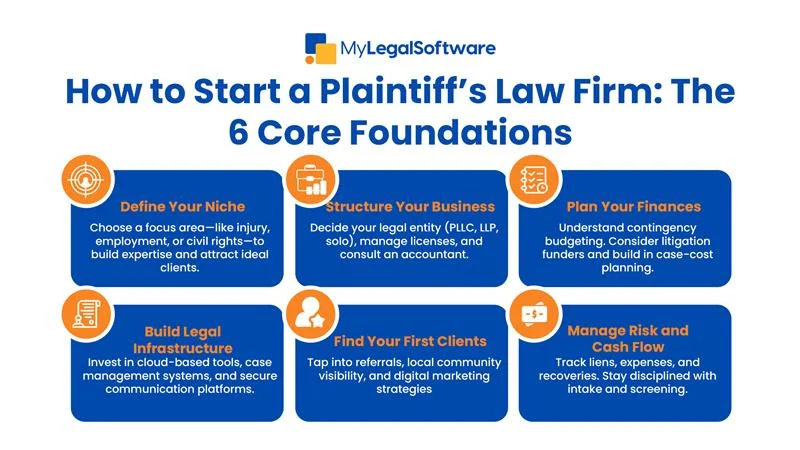
Define Your Niche
Start by getting clear on the types of cases you want to take. Personal injury, employment discrimination, product liability, civil rights, or whistleblower; there are many areas to consider. Choosing one or two allows you to build expertise and attract the right clients from day one.
Know Your Market
To serve your clients well, you need to know who they are and what they need. Are you targeting low-income communities, urban professionals, or gig workers? Knowing your demographics will help you advertise, price your services, and determine where you open your office.
Write Your Mission
What makes your firm different? Are you the aggressive litigator who takes on powerful institutions? The compassionate listener who walks people through difficult moments? Clarifying your values now helps you build a brand that feels authentic and attracts like-minded staff and clients.
Design Your Funding Model
Since plaintiff’s firms often get paid at the end of a case, managing cash flow is crucial. You’ll need enough capital to cover marketing, technology, and case expenses. That could mean self-funding, loans, lines of credit, or litigation funders. Budget conservatively and plan for long payout timelines.
Form Your Business Entity
Choosing the right business structure is critical. Do you want to start as a solo practitioner, PLLC, or LLP? The decision affects taxes, liability, and your ability to grow. Consult with an accountant and a legal advisor early—it’s a foundational part of starting a plaintiff’s law firm the right way.
Building Your Legal Infrastructure
Technology First
In 2025, a modern law firm is a digital law firm. Use cloud-based platforms for secure document storage, e-signatures, and encrypted communication. These tools reduce overhead, boost efficiency, and keep you compliant with privacy regulations.
Case Management
A good case management system is essential when handling multiple files, deadlines, and discovery. It helps you organize everything in one place: documents, medical records, damages, statutes of limitations, so you don’t drop the ball.
Document Automation
Save time and reduce errors by automating repetitive documents like client intake forms, retainer agreements, and demand letters. Templates will allow you to move fast without compromising quality, especially during high-volume periods.
Client Communication
Clear communication builds trust. Offer clients a secure portal, send SMS reminders, and provide regular updates. Transparency sets expectations, prevents misunderstandings, and keeps people feeling informed and respected.
Finding Your First Clients
Referrals from Attorneys
Start by reaching out to attorneys in your network. Many don’t handle plaintiff-side cases and would rather refer them out. Create a referral system, offer a fee split if allowed, and be known as someone who treats their clients with care.
Community Marketing
Become visible in your neighborhood. Sponsor a local soccer team. Attend school board meetings. Host free legal clinics. You don’t need a huge budget, just show up consistently and let people know you’re there to help.
Online Visibility
A good website isn’t optional anymore. Set up a Google Business Profile, invest in local SEO, and write blog content tailored to your ideal client. Whether they’re searching for a “car accident lawyer” or “how to sue my employer,” your firm should appear in the search results.
Screening Cases
Not all leads are worth your time. Develop an intake process that filters out cases with low value or low chances of success. Being selective is a survival strategy, especially early on when resources are limited.
Managing Risk and Cash Flow
Case Budgeting
Before you take on any case, especially contingency-based ones, you need a solid cost projection. Investigations, depositions, expert witnesses, and medical records all cost money. If you’re unsure about the expense-to-value ratio or if the numbers don’t add up, it’s okay to pass. Your firm’s survival depends on smart decision-making.
Third-Party Litigation Funding
If you’re tight on cash, litigation funders can help front case expenses in exchange for a portion of the payout. It’s not free money, though. Use it wisely and only when the case has strong merits and clear financial potential.
Fee Agreements and Disclosures
Every case needs a written agreement. Clearly outline the contingency fee, what expenses the client may be responsible for, and when they can expect updates. It protects you and builds trust.
Tracking Liens, Expenses, and Recoveries
Your success hinges not just on winning cases, but on collecting fees efficiently. Use systems that track medical liens, case expenses, and recovery payouts. Staying financially organized is one of the most overlooked aspects of how to start a plaintiff’s law firm that thrives.
Final Thoughts
Learning how to start a plaintiff’s law firm is about more than just logistics; it’s about choosing a career path rooted in advocacy. You’re taking on cases that matter, for people who often have nowhere else to turn. It’s a bold move, but for the right lawyer, it’s the most rewarding work you’ll ever do.
Success won’t happen overnight. But with a clear vision, thoughtful systems, and a strong network, you can build a firm that stands the test of time. The key isn’t perfection; it’s purpose. Be patient, stay organized, and remember why you started.
And while you’re focused on advocacy, you’ll need tools that take care of everything else. And that’s MyLegalSoftware, a comprehensive system that integrates case management, intake, billing, and client communication features. It brings everything together in one place, so you can focus on your cases, not your calendar.
Frequently Asked Questions
-
What makes a plaintiff’s law firm different from a defense firm?
-
How do I fund my plaintiff’s law firm if I’m working on contingency?
-
Do I need a niche to start a successful plaintiff firm?
-
What are the ethical risks in starting a plaintiff’s practice?
-
How can I attract quality cases in my first year?
-
Can I run a virtual plaintiff’s law firm in 2025?
A plaintiff’s firm represents individuals bringing legal claims, often for injury, discrimination, or consumer harm, typically on a contingency basis. Defense firms represent institutions like insurers or corporations, usually billing hourly. The focus, strategy, and financial model are completely different.
You’ll need upfront capital to cover operations and case costs while waiting for settlements. This could come from personal savings, small business loans, credit lines, or litigation funding companies that finance cases in exchange for a portion of the recovery.
Yes. Choosing a niche helps you market effectively, gain credibility, and streamline operations. It also makes it easier to network with other lawyers and attract referrals.
Key risks include unclear fee arrangements, misleading advertising, and poor client communication. Ethics rules vary by state, so always review your jurisdiction’s bar guidelines. Transparency and documentation are critical from intake to payout.
Focus on referrals from other lawyers, community engagement, and local SEO. Publish helpful content, attend local events, and build relationships with medical providers or social service agencies. Quality leads often come from trust-based networks.
Absolutely. With secure cloud tools, virtual consultations, and e-signature platforms, many plaintiff’s lawyers now run fully remote practices. Just ensure you’re still meeting client expectations and complying with local legal and privacy rules.