

You close out the month. Revenue looks solid. Billable hours are strong. Clients are paying. Yet somehow your cash flow feels strained. Expenses don’t line up with what you expected. Planning for the next quarter feels like guesswork. This is the situation that many attorneys find themselves in.
The financial side of running a practice can feel like a moving target. You want to focus on clients, not spreadsheets. But without a clear law firm budget, small surprises quickly turn into larger setbacks.
A partner hires new staff without knowing the payroll impact. Software subscriptions pile up. Even basic costs like rent and insurance catch you off guard when not planned for.
That’s why in 2025, you should treat budgeting as a central part of your strategy, not just an administrative task. A well-structured law firm budget plan provides stability and makes growth intentional. It helps you stay competitive in a market where clients expect both efficiency and transparency.

What’s a Budget and Why Do You Need One?
A budget is simply a financial roadmap for your law firm. It shows what you expect to earn and how you plan to spend it.
In practice, it’s much more than numbers on a page. Budgeting for law firms is about seeing your financial future before it happens. It reduces uncertainty and limits surprises. It gives you the confidence to make decisions about staffing, investments, and client intake without second-guessing.
One of the biggest benefits of a strong law firm budget plan is cash flow clarity. You know what’s coming in and what’s going out. You’re clear about where the gaps are likely to appear.
With that knowledge, you can decide when to hire and to pace marketing. You can tell when it’s time to expand into a new practice area. Forecasting these moves with a budget is much safer than relying on instinct alone.
Law firm budgets and forecasts also improve client relationships. You can set fees and payment terms realistically, avoiding last-minute changes that damage trust. It also helps partners align priorities. With that, the whole firm moves in the same direction.
Unlike a typical small business, budgets for law firms must account for unique factors, like billing cycles that don’t match expenses, trust accounting requirements, and case-related costs like experts or court filings. These differences mean generic business budgeting tools often fall short. Attorneys need a budgeting process that reflects the realities of legal practice, not just general finance.
Building Your Law Firm Budget
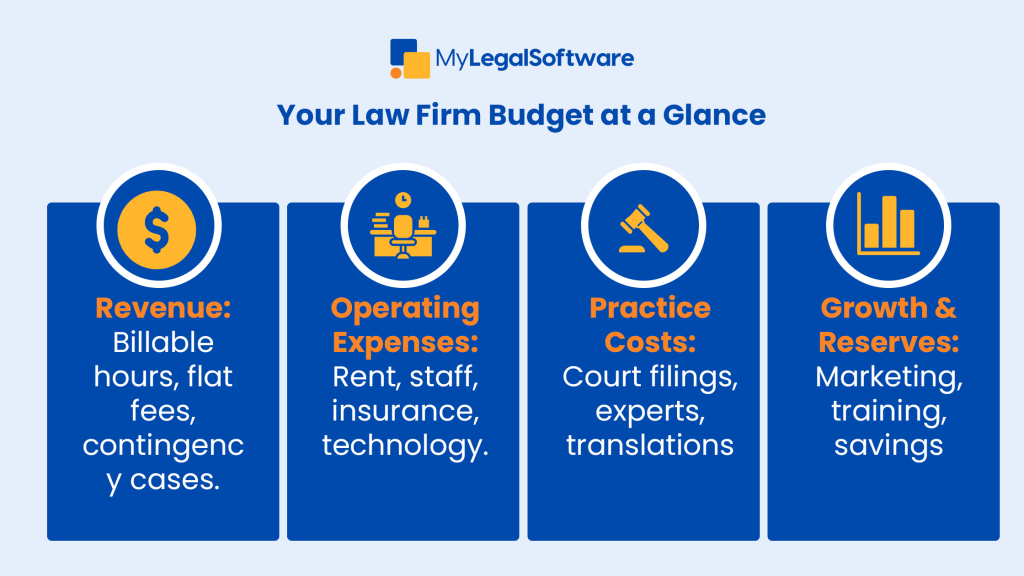
Creating a law firm budget starts with understanding the major categories that drive your finances. Project revenue first. This includes billable hours, flat-fee arrangements, and contingency cases. Each stream has different timing and risk, so it’s important to track them separately.
Next are operating expenses. Think of the basics: rent, utilities, staff salaries, insurance, and technology subscriptions. These are the predictable costs that keep your doors open. A detailed law firm budget example would also include professional dues, continuing education, and marketing spend. All these are recurring but easy to underestimate.
Practice-specific expenses should come next. For litigation, this may mean court filing fees, discovery costs, or paying expert witnesses. For immigration practices, it could be translation services or filing-related costs. Including these in your budget prevents them from eating into profit unexpectedly.
Finally, always connect your numbers to an annual law firm budget. This long view ensures that short-term spending aligns with long-term goals, whether that’s growing your team, investing in technology, or building financial reserves for leaner months.
Budgeting for Different Firm Sizes
Not every firm needs the same budget plan. The approach depends on size, resources, and goals.
For small law firms, the focus should be on essentials. Overhead needs to stay lean, with clear choices about where every dollar goes. That often means choosing technology that saves time. You may have to outsource certain admin tasks and delay noncritical investments until revenue is steady.
A solo law firm budget might include only core costs like malpractice insurance, bar dues, rent, and one or two software tools. Even with limited resources, budgeting creates control.
For mid-sized or growing firms, priorities change. More attorneys mean payroll becomes a significant line item. Marketing and client acquisition become strategic rather than optional.
You may also need to budget for specialized staff like paralegals, IT support, or a full-time office manager. You should also consider professional development and retaining talent, not just covering costs.
Regardless of size, flexibility is key.
A law firm budget plan is not static. It grows with your practice. Solo attorneys planning to add an associate in two years can project the cost now. Mid-sized firms looking to expand into new markets can map the financial impact ahead of time. The right budget creates room for growth without unnecessary risk.
Tracking and Adjusting Your Budget Over Time
Creating a budget is only the beginning. The real value comes from tracking and adjusting it regularly.
A law firm budget tracking process should include quarterly reviews. Compare what you projected with actual results.
If revenue came in lower, identify why. Was it due to fewer billable hours, delayed client payments, or slow contingency cases? If expenses are higher, pinpoint where they rose. Technology, payroll, or even office utilities can creep upward quietly.
Spotting these trends early helps you act before they affect profitability. For example, if software costs rise 15% in one year, you can renegotiate or switch providers. If a practice area consistently underperforms, you can adjust staffing or marketing investments.
Most importantly, never set it and forget it. An annual law firm budget is a living document. Markets change, caseloads shift, and expenses fluctuate. By treating your budget as a tool to guide decisions and not just paperwork, you keep control of your firm’s financial health.
Common Budgeting Mistakes to Avoid
Even experienced attorneys can make mistakes when creating a budget. The most common mistakes aren’t always dramatic. They’re subtle oversights that build up over time.
Here are some of the mistakes to avoid
- Overestimating revenue, especially from contingency cases.
- Underestimating expenses, like insurance or payroll taxes.
- Ignoring marketing and professional development costs.
- Forgetting to budget for taxes and compliance fees.
- Treating the law firm budget as a fixed document instead of a flexible tool.
- Overlooking technology upgrades until they become urgent and costly.
- Failing to separate trust account obligations from operating revenue.
Avoiding these mistakes keeps your financial picture clear and your firm prepared for both growth and unexpected challenges.
Building Financial Confidence in Your Firm
Budgeting isn’t about putting figures on spreadsheets. It’s about giving yourself peace of mind. Attorneys who consistently budget gain clarity on where their firms stand and confidence in where they’re headed. Even a small law firm budget, when done right, creates stability and focus.
Your budget helps you make better decisions: when to hire, how to invest, and where to expand. It also builds a culture of accountability within your practice, aligning partners and staff around the same financial goals.
At the same time, the right tools support that journey. MyLegalSoftware (MyLS) is trusted by immigration attorneys and general practitioners to simplify case management and daily workflows.
From intake to resolution, it streamlines tasks so you can focus on building a firm with both financial and operational confidence. Exploring the 14-day free trial is an easy way to see how it supports your long-term practice goals.
Frequently Asked Questions
What is the purpose of a law firm budget?
To give clarity on revenue and expenses so you can plan growth and stay financially stable.
How often should I update my law firm budget plan?
At least quarterly, but more often if your firm is growing or adding new practice areas.
Is budgeting for small law firms really necessary?
Yes. Even solo attorneys benefit from a simple law firm budget plan that tracks cash flow and avoids overspending.
Can a law firm budget improve profitability?
Absolutely. Budgeting reveals waste, highlights growth opportunities, and ensures resources are used strategically.