

You thought you had a handle on your firm’s finances until the end-of-year numbers landed on your desk. Somehow, costs were really high, invoices slipped through without proper review, and a handful of litigation matters ran wildly over budget. Margins are squeezed, clients are frustrated, and partners are asking hard questions.
What if your law firm could take control of every dollar spent, without drowning in spreadsheets or guesswork?
Legal expense management isn’t just about cost-cutting. It’s about building a profitable, scalable legal operation. Without it, firms risk losing both money and client trust. And in today’s legal world, that’s a risk you can’t afford.
What Is Legal Expense Management?

Legal expense management is the process of tracking, analyzing, and optimizing all costs associated with legal work, both in-house and external. It goes beyond bookkeeping to include budgeting, billing oversight, cost forecasting, and vendor performance evaluation.
It’s a strategy used by law firms, corporate legal departments, and claims-heavy organizations to ensure they’re not just delivering outcomes but doing so efficiently and profitably. Whether it’s reviewing a litigation invoice or deciding on the most cost-effective outside counsel, legal expense management helps your team make smarter financial decisions.
By linking processes like billing approvals, matter budgeting, and vendor analysis, you can manage legal expenses at every stage—from planning to payment.
Why Managing Legal Expenses Is More Critical Than Ever
Modern legal operations face a tough balancing act: delivering strong results while staying within increasingly tight budgets. That’s why legal expense management is important, not as an optional add-on, but as a business necessity.
-
Rising Costs, Tighter Budgets
Litigation isn’t getting cheaper. Law firms face higher outside counsel rates, inflated operating costs, and increasing demands for specialized services. At the same time, clients and finance departments are imposing stricter budget controls. Without visibility into real-time legal expense, you may overshoot budgets without realizing it until it’s too late.
-
Demand for Transparency from Clients
Today’s clients want clarity. They expect predictable billing, detailed breakdowns, and full justification for each charge. Vague invoices or unexplained fees damage trust and invite billing disputes. Managing legal expenses properly means your clients get transparency by default, not as an afterthought.
-
Ethical and Compliance Risks
Mismanaged expenses can lead to more than financial problems; they can trigger ethics violations or compliance failures. From duplicate billing to exceeding agreed-upon budgets, even minor oversights can raise red flags. A structured expense management system helps prevent these issues before they spiral into regulatory or reputational damage.
What Does Legal Expense Management Actually Involve?
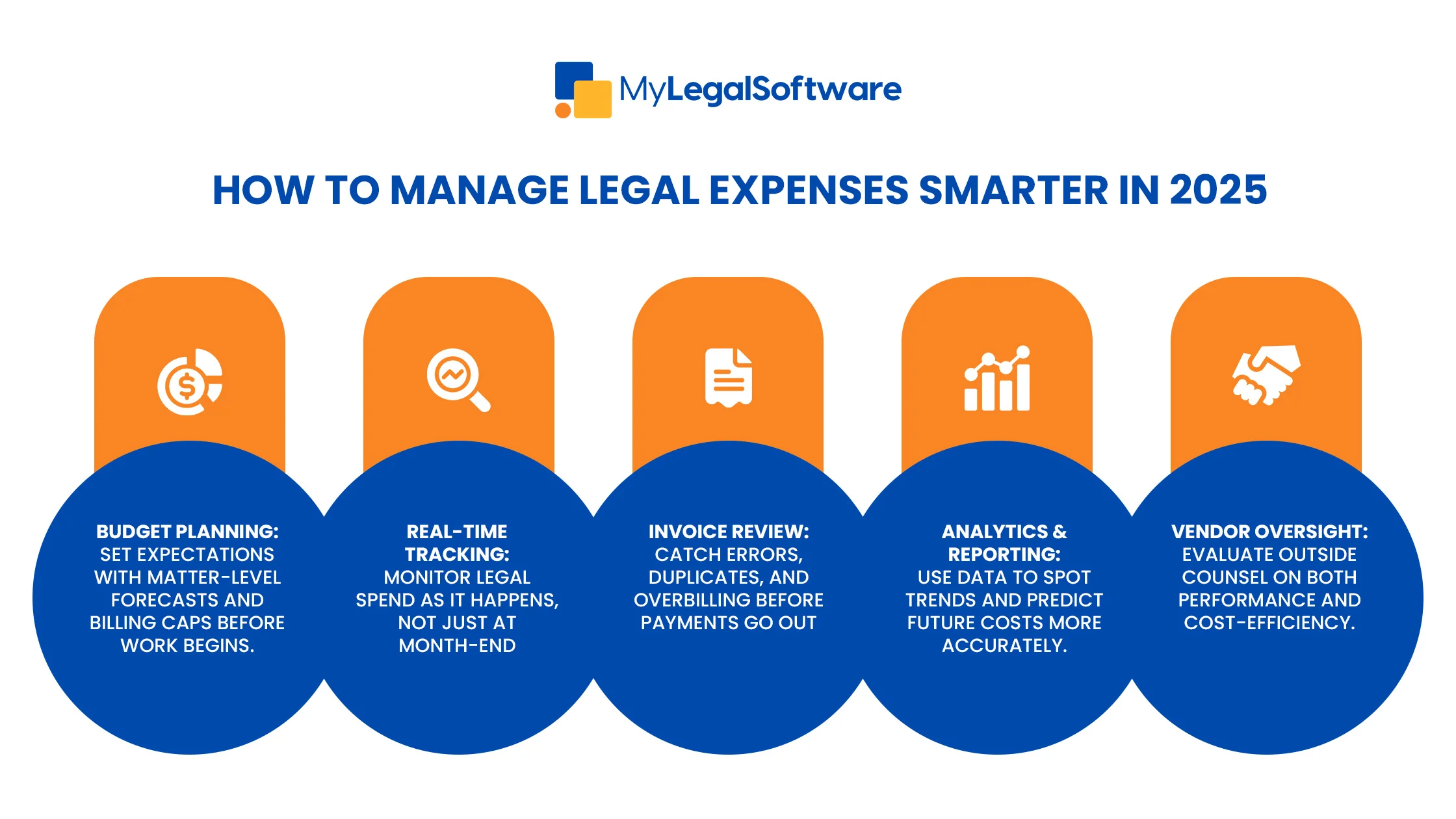
Legal expense management isn’t a single task; it’s a collection of processes that keep your legal spend efficient and accountable. Here’s what it includes:
1. Budget Planning for Legal Matters
Start every matter with clear budget expectations. That means setting cost projections, allocating resources, and defining billing caps with outside counsel. When you know the limits upfront, there are fewer surprises later.
2. Real-Time Expense Tracking
Waiting for a monthly or quarterly report is too late. Real-time tracking keeps your team aware of spending trends as they happen, helping avoid costly overruns.
3. Invoice Review and Approval Workflows
Every invoice should go through a standardized review. This helps catch duplicates, errors, or billing that doesn’t follow agreed-upon rates, before it’s paid.
4. Reporting and Analytics
Use data from past matters to identify cost trends, flag outliers, and benchmark vendors. Strong analytics allow your legal team to improve budgeting accuracy and reduce future spend.
5. Outside Counsel Management
Monitor outside counsel not just by performance, but by cost-efficiency. Expense management tools let you compare firms, track compliance with billing guidelines, and reward the vendors delivering value.
Top Benefits of Legal Expense Management
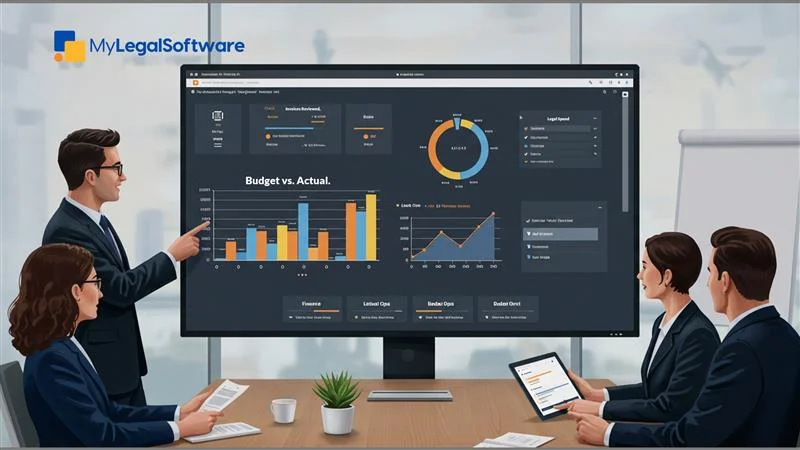
When legal expenses are tracked and managed strategically, the ripple effects are massive. Your team becomes more efficient. Financial waste drops. Clients feel more confident in your firm’s processes. Here are the most direct benefits of adopting legal expense management practices:
- When your team sees real-time spend, they make faster, data-backed decisions to minimize unnecessary costs.
- Clients appreciate transparency, and predictable invoices build long-term trust.
- Tracking expenses reveals cost leaks early, allowing firms to tighten operations and protect margins.
- Firms gain visibility into vendor performance and internal team efficiency using spend analytics.
- You gain full visibility into your legal spend, so you can avoid budget overruns and last-minute surprises.
- Cut out inefficiencies like duplicate billing and noncompliant invoices.
How to Manage Legal Expenses Efficiently in 2025

With rising litigation costs and evolving client expectations, you can’t afford to rely on outdated processes. Here are the strategies firms are using in 2025 to manage legal expenses smarter, faster, and with less risk:
1. Centralize All Legal Spend Data
Stop relying on fragmented spreadsheets. Use a centralized dashboard that aggregates spend by matter, vendor, and time period.
2. Automate Invoice Review and Approval
Leverage rule-based automation to flag noncompliant entries and duplicates. Make sure that no unapproved invoice gets processed.
3. Align Finance and Legal Teams Early
Budget conversations shouldn’t happen after the fact and matter planning. Involve finance teams from the start to create smarter forecasts and reduce friction.
4. Choose the Right Legal Management Software
Look for platforms that integrate billing, matter tracking, and reporting into one system. Built-in compliance and automation are a must for any software to effectively serve you.
Your Key to Long-Term Profitability

If you can’t track where every dollar goes, you’re not just losing money; you’re losing control. Legal expense management helps you plan smarter, reduce risk, and deliver more value to your clients. In today’s legal system, efficiency is the currency.
But to manage legal expenses at scale, you need more than policies; you need technology that can keep up. That’s where MyLegalSoftware makes a difference. It helps you manage cases efficiently, automate reporting, and generate reports that make budgeting easier.
Want to see how it works? Try MyLegalSoftware free for 14 days and see the difference it makes in your legal operations.
Frequently Asked Questions
-
What is the meaning of legal expenses?
-
What is a law firm’s biggest expense?
-
How can law firms manage legal expenses claims litigation effectively?
-
Can legal expense management improve client relationships?
-
How can in-house legal teams manage legal expenses with external counsel?
-
What are the best practices for managing legal expenses in litigation?
Legal expenses are the costs incurred during legal work, including attorney fees, court costs, expert services, and related administrative fees.
For most law firms, the largest expense is attorney compensation, followed by office overhead and technology costs.
To manage legal expenses claims litigation, firms should use real-time tracking, enforce billing guidelines, and adopt tools that automate invoice review and expense analysis.
Yes. Transparent billing and better budgeting lead to more trust, fewer disputes, and higher client satisfaction.
Set clear billing guidelines, monitor invoices in real time, and track cost vs. performance across vendors.
Start with detailed budgets, monitor ongoing costs, and use analytics to control case-level spending throughout the matter lifecycle.