
Technology, new regulations, and changing client expectations are altering the way lawyers work. In 2025, legal software is at the center of that change.
If you’re an attorney or run a law firm, you already know clients expect speed, accuracy, and secure access to case details anytime, anywhere. Many firms are now using tools that let you deliver better legal services to meet client needs.
So, let’s dig into the key legal software trends you should know this year and what they mean for your practice.
-
Mobile Access Legal Software
Work isn’t tied to your desk anymore. In 2025, clients expect lawyers to stay connected on the go, which is why law firm mobile technology is one of the biggest competitive advantages.
Many legal apps now let you review case files and send instant updates. Attorneys now need remote access legal software. It’s how you keep pace with clients who want answers in real time.
These mobile tools aren’t just for convenience. They’re built with security first. A secure mobile legal practice means your team can work from anywhere without putting client data at risk.
-
Offline Legal Software Features
Even with constant connectivity, attorneys know Wi-Fi isn’t always reliable. Courtrooms, travel, and client meetings can leave you offline.
That’s why legal software with offline mode is taking off in 2025. Imagine drafting a contract, reviewing pleadings, or pulling case notes without worrying about your signal. Then, once you’re back online, everything syncs instantly.
Offline access is a safety net for attorneys. It keeps the workflow moving, no matter the environment.
-
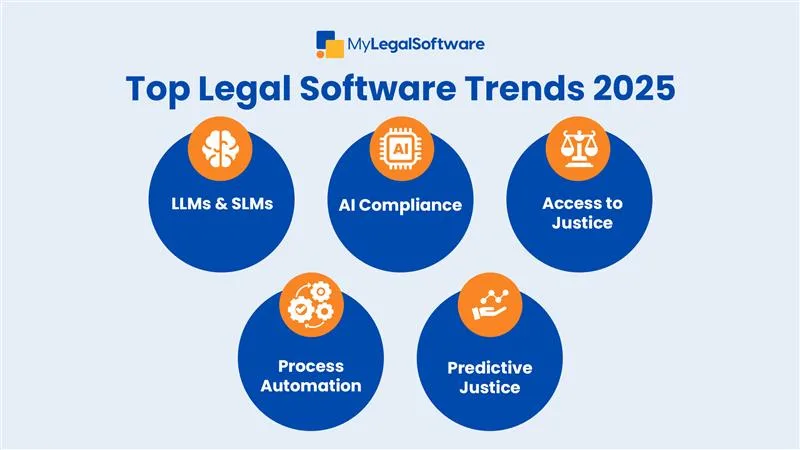
Large Language Models (LLMs) and Small Language Models (SLMs)
You’ve likely heard of tools like ChatGPT and Gemini. These large language models are making a mark on legal practice by drafting contracts, generating summaries, and answering client FAQs.
But here’s what’s new: small language models (SLMs) in the legal sector. They are trained specifically in legal content. They’re more private, faster, and tailored to tasks like contract review or document drafting.
And while SLMs won’t fully replace LLMs, they’ll carve out a fundamental role for law firms that want industry-specific and cost-effective AI power.
-
AI Regulation and Compliance
AI isn’t just a tool; it has also become a legal issue. As governments roll out new guidelines, attorneys are stepping in to help companies stay compliant.
Drafting AI policies and auditing systems for bias will soon become part of everyday legal work. And that means law firms must ensure their attorney mobile case management and AI tools also meet security and privacy rules.
Lawyers aren’t just AI users. They’re AI watchdogs.
-
Lawtech to Level the Playing Field
In 2025, legal software is no longer just for big firms. Self-service portals, AI-powered chatbots, and affordable online legal services are making law more accessible.
This means that small businesses and individuals can also use it. This trend is an opportunity to scale services, reach new clients, and provide more value.
-
Legal Process Automation
No one goes to law school only to spend hours on repetitive tasks. Automation tools are finally tackling that.
By 2025, law firm mobile tools and AI-driven software will handle repetitive work, like discovery, contract management, and compliance tracking.
The payoff is less time buried in paperwork and more time spent on strategy, relationships, and courtroom wins.
-
Predictive Justice
Imagine knowing the likely outcome of a case before it even goes to trial. That’s exactly what predictive justice does.
While the outcome of a trial cannot be known for sure, AI can analyze case law and court decisions. It helps attorneys make more intelligent decisions about litigation strategies, settlements, and resource allocation.
These tools are already on the market. Firms now deliver data-driven services by combining predictive tools with attorney mobile case management.
The Big Picture
Legal tech adoption isn’t slowing down. It’s accelerating.
Firms that once resisted new software now realize they can’t compete without it. Tools for research, contract review, e-discovery, and mobile case management are becoming standard.
The winning formula is a combination of technology and human expertise. Firms that embrace both will deliver more value and at a lower cost.
Grow Your Practice with MyLegalSoftware
In 2025, lawyers now have the freedom to work anywhere, the security to protect clients, and the intelligence to make smarter decisions.
Carefully pick your tool. From mobile access legal software to offline legal software features, the future of your practice depends on how well you use them.
MyLegalSoftware (MyLS) was built for lawyers. It is a legal case management software packed with features to help your firm grow and adapt to changing times.
Ready to join MyLS in the future of legal technology?
Start a free trial or schedule a demo now.

Frequently Asked Questions
Why should attorneys care about legal software trends in 2025?
You should care because legal practice is changing. Clients now expect speed, accuracy, and flexibility. So, staying ahead of tech trends keeps your firm competitive.
What’s a big change in legal software this year?
Mobile-first tools. Attorneys can now work anywhere, on trains, in court, or at home. Secure mobile access is now the standard.
Can legal software really work offline?
Yes. Many tools now come with offline features. You can draft, review, or manage cases without internet access. Once you’re online again, everything syncs automatically.
How does mobile access help law firms?
It saves time. Instead of waiting to get back to the office, you can respond to clients, update cases, or check deadlines on the go.
Is it safe to use legal software on a phone or tablet?
Yes, if you use tools built for secure mobile legal practice. Look for encryption, two-factor authentication, and strict access controls.
Will attorneys lose the human touch by relying on tech?
Technology helps handle repetitive work, allowing you to focus on relationships, strategy, and more complex problems that technology cannot solve.
How do I pick the right legal software in 2025?
Focus on what matters most, like:
- Secure remote access.
- Offline mode for when you’re not connected.
- Mobile tools that fit your workflow.
- Strong support and easy integration with your current systems.
Where does MyLS fit into these trends?
MyLS is designed with attorneys in mind. You get a case management tool with secure mobile access that keeps you productive wherever you are.