

A senior associate walks into the office asking why their case management system has two different client records for the same person. To compound matters, the billing clerk is way behind, and the IT vendor’s invoice for “urgent fixes” landed in today’s inbox.
What if your firm could forecast technology costs confidently, avoid surprise invoices, and make clear budget decisions that support growth instead of causing stress?
Why Tech Budget Planning Feels Overwhelming
Many law firms treat technology spend as reactive. A broken tool gets patched, a new app is adopted because someone on the team likes it, and the next quarter brings unexpected subscription renewals. That reactive approach creates unpredictable expenses and wastes time.
Shifting to proactive planning simplifies decisions, spreads costs across the year, and aligns spend with firm priorities.
Start With the Right Mindset
Budgeting technology is not an IT exercise only. It is a strategic decision about how your firm delivers client service and protects revenue. Treat the tech budget like staffing decisions. Prioritize tools that increase billable hours, reduce errors, or improve client retention.
When you view tech spend as an investment in productivity, you make clearer tradeoffs and get better returns.
Understand Your Current Technology Footprint
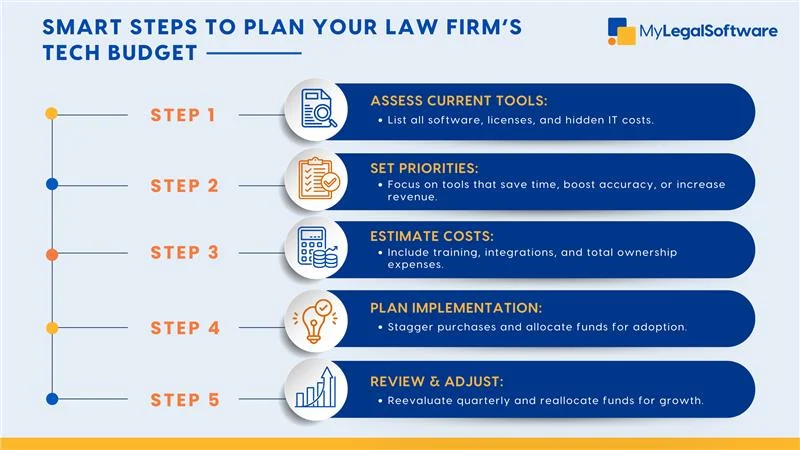
Begin by cataloging what you already pay for. List subscriptions, licenses, hosting fees, vendor support, and one-off purchases. Include hidden costs like training time and staff hours spent fixing integration errors.
This inventory is the foundation for any credible law firm tech budgeting process.
What To Include in Your Inventory
- Annual And Monthly Software Subscriptions
- Case Management and Billing Tools
- Document Management and Storage Costs
- Security And Backup Services
- It supports or managed services contracts
- Training And Onboarding Expenses
Set Clear Business Priorities
Decide what the firm needs technology to accomplish this year. Is the focus on improving billing accuracy, increasing remote work capacity, or growing a practice area? Align your plan with measurable goals.
With priorities in place, you can score potential purchases by expected impact and urgency.
How To Estimate Attorney Technology Costs
Estimate the total cost of ownership not just the vendor sticker price. Combine direct fees with implementation, training, and the expected internal hours for adoption. For example, a practice management tool might have low monthly fees but require significant setup time.
Use simple forecasting templates to capture these variables and produce a realistic annual cost for each initiative.
Step-by-Step Guide to Creating a Practical Tech Budget
-
Assess needs and score options
Evaluate tools by impact and ease of implementation. Score each option on criteria such as time saved, revenue impact, client experience, and security improvement. Prioritize high-impact and low-effort items first.
-
Map costs across the year
Avoid concentrating all renewals in one month. Stagger purchases and renewals to smooth cash flow. Convert annual fees to monthly equivalents when presenting budgets to partners for easier comparison.
-
Plan for implementation costs
Include vendor onboarding fees, third-party integrations, and resources for data migration. Allocate a buffer for unexpected integration work.
-
Build adoption and training into the budget
Training is a cost and a success factor. Budget for short role-based sessions, quick reference guides, and a small internal champion team that can answer questions and enforce best practices.
-
Reevaluate quarterly
Make the tech budget a living document. Quarterly reviews let you shift funds to higher priority needs, cancel underused subscriptions, and capture realized savings to reinvest.
Key Features to Prioritize When Buying Legal Software
- Case Management That Centralizes Client Data and Documents
- Time Tracking Integrated with Billing for Better Revenue Capture
- Secure Client for Communications and File Exchange
- Document Management with Version Control and Audit Trails
- Reporting Dashboards That Show ROI And Usage Metrics
Choosing tools that address multiple needs reduces the number of subscriptions you manage and simplifies your law firm’s financial planning software process.
Best Practices for Adoption and Training
- Appoint A Technology Budget Owner to Maintain the Inventory and Renewal Calendar
- Pilot new tools with a small team before firm-wide rollout
- Create role-based quick start guides for busy attorneys
- Use Usage Metrics to Enforce License Reclaim Policies for Underused Software
- Communicate Expected Benefits to the Firm So Staff See the Value
These practices protect the investment by increasing adoption and reducing wasted spend.
Practical Tips to Reduce Upfront Costs
- Negotiate annual contracts after a successful pilot to lower per-user fees
- Consolidate Vendors Where Possible to Get Volume Pricing
- Leverage Free Training Resources from Vendors to Cut Training Spend
- Consider Staged Rollouts to Spread Implementation Costs Over Multiple Budget Periods
Small changes like timing negotiations and consolidating licenses often produce immediate savings.
How To Measure Success and Prove ROI
Track simple metrics to show the budget is working. Monitor time saved per matter, reduction in billing disputes, number of integrations completed, and user adoption rates. Present these metrics at partner meetings to validate the plan.
When your metrics show increased billable hours or faster invoicing, you turn the tech budget from an expense line into a revenue support strategy.
Addressing Security and Compliance Costs
Security cannot be optional. Include data protection, backup, and secure authentication costs in your plan. These items protect client confidentiality and reduce costly breaches. Plan for periodic security training, which is a small cost compared to potential liability.
Tools And Templates to Help with Forecasting
Use a simple spreadsheet or dedicated law firm budget tools to forecast expenses by category and month. Create columns for vendor, contract length, start date, recurring cost, implementation cost, and a short description of business value. This transparency helps partners make faster decisions.
Common Pitfalls to Avoid
- Ignoring Hidden Costs Such as Data Migration or Custom Integrations
- Overbuying Licenses That Remain Unused
- Failing To Track Renewal Dates Leading to Surprise Charges
- Buying Tools Before Mapping Process Changes That Enable Adoption
Being aware of these traps helps you build a realistic plan and maintain discipline.
Your Next Steps
Planning your firm’s technology budget does not need to be overwhelming. Start with an inventory, set clear priorities, estimate true costs including implementation and training, and review the plan quarterly. A thoughtful approach reduces surprises and allows technology to support growth and efficiency.
Schedule a free demo to see how MyLegalSoftware can simplify your law firm tech budgeting, consolidate tools, and provide the usage metrics you need to make confident spending decisions.
Book a free demo with MyLegalSoftware and start planning your law firm tech budget with confidence.

Frequently Asked Questions
How much should a law firm spend on technology?
Most firms allocate 5–7% of total revenue to legal technology, covering software, training, and support. This keeps systems efficient without overspending.
How often should a law firm review its tech budget?
Review your tech budget quarterly to adjust for new needs and ensure expenses match firm goals. An annual full review helps reset long-term priorities.
What hidden costs should law firms plan for?
Don’t forget training, data migration, integrations, and maintenance fees. These hidden costs can add up quickly if left out of your initial tech budget.