

Your days are packed. Emails keep piling up. Deadlines never stop. A single missed update can throw an entire case off track. This pressure is constant for many small and mid-size law firms.
You need to serve clients well, stay organized, and keep costs in check. Manual tracking and scattered tools only make things harder. This is why more law firms are adopting workflow automation solutions.
Legal workflow automation replaces repetitive tasks with smart systems that keep cases moving. It saves time, cuts errors, and gives you space to focus on the law, not the paperwork. This shift is quickly becoming a necessity for firms that want to stay competitive.
The Hidden Costs of Manual Processes
Manual processes drain time and profits in ways that are easy to miss. Attorneys enter the same client details across multiple forms. Staff members chase missing signatures or search through long email threads for updates.
A single overlooked deadline can create expensive delays or even malpractice risks.
These small inefficiencies add up quickly. Hours lost to repetitive tasks mean fewer billable hours. Frustrated staff spend energy on administrative work instead of client service. Clients notice when communication lags or documents arrive late.
Law firm process automation solves these problems with built-in task tracking, automated reminders, and smart workflows. You never have to rely on memory or scattered notes. The system moves each case through predefined steps.
Deadlines are flagged automatically. Documents route to the right person without extra emails. The result is a smoother operation and more time for legal analysis, client strategy, and court preparation.
Why Automation Works for Small and Mid-Size Firms
Smaller firms feel the pressure first. Limited staff must handle heavy caseloads while client expectations grow. Every delay or missed detail stretches already thin resources. Unlike large practices, there’s little room to absorb errors or hire extra help.
Legal workflow automation gives these firms a way to scale without adding headcount. Small teams can manage large volumes of work efficiently with the right law firm automation tools.
Automated client intake ensures every inquiry is captured and routed. Document generation pulls data from existing records to create accurate filings in seconds. Deadline tracking sends alerts to everyone involved, reducing last-minute scrambles.
These features free attorneys to focus on strategy and client relationships. Instead of reacting to problems, your team can plan ahead and meet deadlines with confidence. For small and mid-size firms, automation is a competitive necessity.
Key Benefits of Legal Workflow Automation
Switching to legal workflow automation delivers results that attorneys can measure.
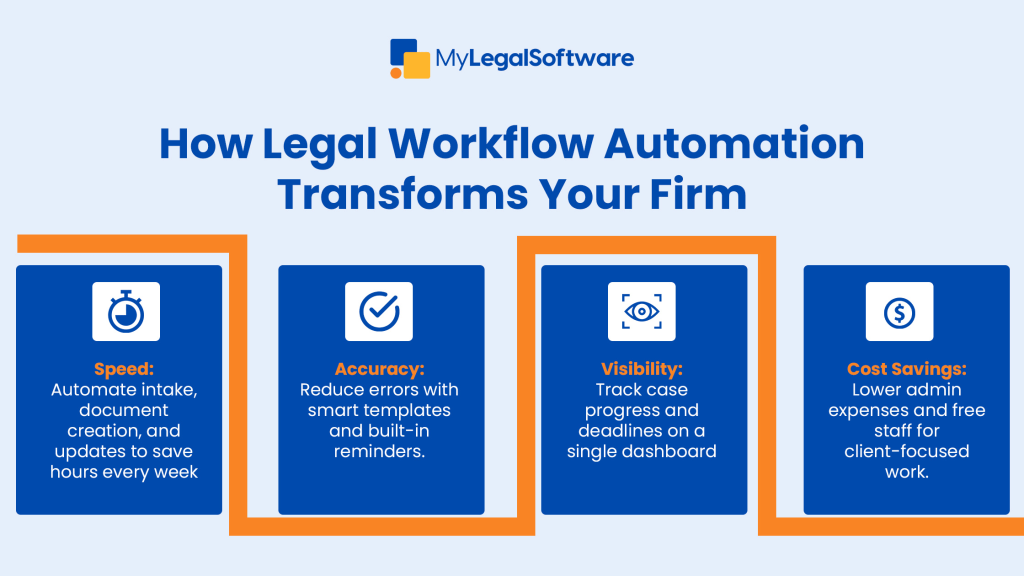
The most obvious benefit is speed. Automated systems cut the time spent on intake, document preparation, and case updates. What once took hours can now be done in minutes. This faster turnaround keeps clients informed and satisfied.
Accuracy improves as well. With workflow automation, law firms reduce errors caused by manual data entry. Templates pull information from a single source, ensuring consistency across filings, letters, and contracts. Smart reminders and built-in checks help prevent missed deadlines.
Partners and associates also gain clear visibility into each case. Dashboards show progress at a glance, from pending tasks to upcoming hearings. This level of transparency makes it easier to allocate resources, forecast workloads, and track performance.
Legal operations automation even supports better billing. Automated time tracking and task logs create accurate invoices, reducing disputes and improving cash flow. With automation, a lean team can provide the same speed, precision, and responsiveness as larger practices.
Choosing the Right Solution for Your Firm
Not every automation platform fits every firm. Before adopting law firm process automation, start by identifying your top pain points. Do you need stronger document management, intake tracking, or deadline alerts? Clarifying priorities will help you evaluate options effectively.
Ease of use is critical. Attorneys and staff should be able to learn the system quickly without complex training. Look for law firm automation tools that integrate with your existing practice management software.
Scalability also matters. Choose a solution that can grow with your firm as caseloads increase. A tool that feels comfortable today should still meet your needs in three to five years.
Finally, test before committing. Many providers offer free trials or pilot programs. Use this time to check for flexibility and responsive vendor support. A careful rollout ensures smooth adoption and minimizes disruptions during the transition to legal workflow automation.
Make Your Firm Future-Ready
The move to legal workflow tools is about more than technology. It’s about freeing your team to focus on clients and strategy instead of routine tasks. Small and mid-size firms that adopt automation now will work smarter, serve clients better, and reduce costs for years to come.
MyLegalSoftware is one option worth exploring. It’s a trusted case management platform for immigration attorneys and general practitioners. It supports automated law firm processes from first contact to final resolution. You can try MyLS free for 14 days to see how it helps manage cases and keeps your team organized from start to finish.

Frequently Asked Questions
What is legal workflow automation in law firms?
It is the use of software to handle repetitive legal tasks like client intake, document creation, and deadline tracking.
Can small law firms afford automation tools?
Yes. Many platforms offer flexible pricing so small and mid-size firms can start small and scale as needed.
How does workflow automation reduce overhead?
Automation cuts time spent on manual tasks, which lowers administrative costs and reduces errors that lead to expensive fixes.
Does automation replace attorneys or staff?
No. It supports them by taking over routine work so they can focus on legal strategy and client service.
Can legal workflow automation integrate with my existing systems?
Most modern tools connect with billing, email, and case management platforms to keep all data in one place.