

The legal industry is witnessing a new era. Intelligent systems, automation, and cloud-based storage are changing the way attorneys handle cases. These innovations are redefining the future of legal practice management.
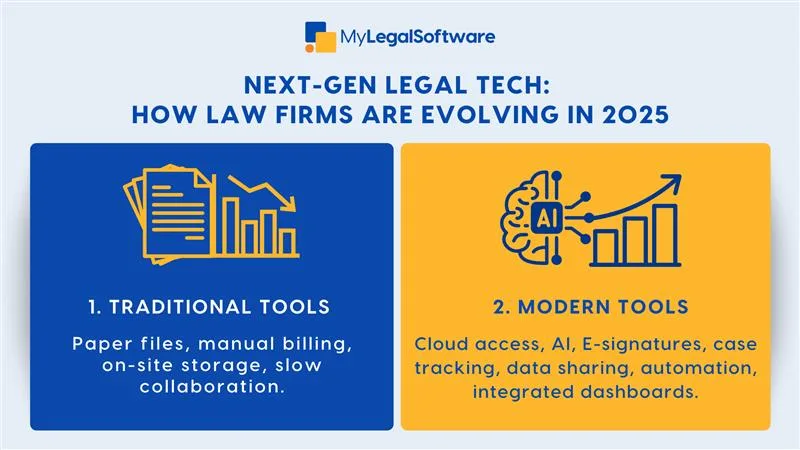
Let’s look at what’s driving this next chapter of legal software trends and what law firms can expect.
AI Tools Take Center Stage
Artificial intelligence is currently the biggest force behind legal tech tools. In 2025, AI-powered platforms are going beyond basic automation. They are offering more assistance in research, writing, and predictive analytics.
For example, AI-driven analytics can help attorneys identify settlement trends and evaluate data patterns with accuracy that was once impossible. Meanwhile, natural language processing (NLP) enhances the quality of legal writing and automates contract review. AI is reducing manual effort and increasing precision.
The result is shorter turnaround times, better decision-making, and more positive case outcomes.
The Cloud Is the New Office
The rise of cloud-based case management continues to accelerate. In 2025, more firms are abandoning on-premise systems in favor of cloud-driven platforms. The switch is no surprise, as the cloud is secure and allows easy collaboration between attorneys and clients.
Encrypted data storage and permission-based access are features of cloud-based systems. They are essential in legal practice management for security and compliance. Cloud systems also simplify remote operations, allowing teams to work from anywhere without compromising client confidentiality.
Law Firms Without Borders
Remote/Hybrid work is here to stay, and next-generation law firm software reflects that change. Firms are embracing VoIP systems, high-speed cloud communication tools, and secure video conferencing to maintain productivity across distributed teams.
This wave of attorney software advancements supports real-time document sharing, virtual depositions, and collaborative editing. It does all these while preserving the security standards the legal industry demands.
In 2025, the leading firms are those that invest in remote collaboration technology.
Automation and Document Management Go Hand-in-Hand
Automation continues to be one of the most impactful legal technology innovations. Law firms are now automating repetitive tasks, like contract generation and document filing. They also use AI-powered compliance checks to ensure document accuracy.
Combined with digital signatures and smart templates, these systems cut down administrative time and human error. They help attorneys focus on strategy and client relationships.
In 2025, document management is becoming a fully integrated ecosystem that supports the entire lifecycle of legal documents.
Financial Management Made Simple
Legal software in 2025 won’t only help manage cases; it’ll also manage cash flow. Expect advanced financial management tools that automate billing, track expenses, and generate financial insights.
These systems simplify time tracking, automate client invoicing, and comply with trust accounting rules. They help improve payment consistency and transparency.
Growing law firms that integrate these legal tech features will enjoy healthier financial operations and long-term scalability.
Types of Tools Powering the Next-Gen Law Firm
As legal practice management advances, several key software categories are defining the next generation. They include:
Practice Management Systems
Next-gen practice management platforms, like MyLegalSoftware (MyLS), centralize case tracking, client communication, and billing all in one intuitive dashboard. This reduces administrative overhead and keeps every detail accessible. It helps attorneys stay organized and efficient.
Legal Research Tools
Gone are the days of endless case law digging. Modern legal research tools use AI to scan massive databases and find relevant precedents. Lawyers across different practice fields can now work on cases faster.
Automated Document Suites
Customizable templates and e-signature integration are document automation tools that improve accuracy and speed. Every second counts when handling a legal brief, and these tools ensure documents are consistent and error-free.
Client Portals
Client portals are the new norm for secure communication. With encrypted access, clients can review documents, track progress, and stay informed. This tool increases transparency and client satisfaction.
Billing & Accounting Software
Modern billing software automates invoices, manages accounts, and ensures ethical compliance. By simplifying financial workflows, firms can maintain steady cash flow and reduce administrative challenges.
Communication & Collaboration Platforms
VoIP phone systems, encrypted chat, and video conferencing are communication tools that are now essential for agile and secure teamwork. These platforms keep attorneys and clients connected, wherever they are.
MyLegalSoftware Is the Next-Gen Platform for Law Firms
At the center of this transformation is MyLegalSoftware (MYLS), a next-gen legal practice software built for law firms of every size.
MYLS offers:
- Immigration and General Practice Tools
- Intuitive Financial and Accounting Features
- Employee Management and Collaboration Tools
- Flexible Integrations and Customization
- Document Management & Secure Storage
- Analytics and Reporting for Data-Based Decisions
MyLS’ standout features are ideal for immigration and general legal practice management. It simplifies operations and increases efficiency.
Start your free trial or schedule a demo today.
Frequently Asked Questions
What makes next-gen legal practice software different from traditional tools?
Next-gen software uses AI and cloud integration. It helps to analyze, predict, and speed up workflows, so that lawyers can make better decisions.
How will AI impact law firms in 2025?
AI will handle more of the repetitive work, like reviewing documents or drafting contracts. It’ll also help attorneys spot trends in cases, predict outcomes, and come up with better client strategies based on data findings.
Is cloud-based legal software really secure?
Most modern secure law firm storage solutions now use advanced encryption, two-factor authentication, and role-based permissions. That means your data is often safer in the cloud than on local servers that can be lost, stolen, or corrupted.
Can automation really save time for lawyers?
Automation takes care of repetitive administrative work like document generation, time tracking, and billing. It frees you up to focus on legal strategy, not paperwork.
Will these new legal software trends replace human lawyers?
They’ll support lawyers, not replace them. The goal is to handle the routine, time-consuming tasks so attorneys can focus on the parts that require a human touch, such as complex analysis, negotiation, and client relationships.
What should law firms look for in next-generation software?
Look for software that combines case management, billing, secure file storage, and collaboration tools in one place. Integration, ease of use, and cybersecurity are non-negotiables in 2025.