
With cybercrime rising, law firms are more at risk. According to an American Bar Association Cybersecurity Report, 29% of firms experienced some form of a security breach in 2023.
This blog covers how you can protect client data and maintain credibility.
What Is Putting Law Firm Data at Risk?
Law firms are sitting on a goldmine of sensitive information, such as trade secrets, contracts, financial records, and personal data. No surprise that they are prime targets.
However, a single breach can have significant consequences, such as:
- Compromised attorney-client privilege
- Leaked communications
- Ransomware attacks
- Lost client trust
- Malpractice allegations
That’s why your law firm needs airtight systems that combine legal file storage security with built-in data protection measures.
Why Secure Legal File Storage Matters
Almost every file in a lawyer’s cabinet carries legal and ethical weight. So, protecting all that data is necessary to maintain a strong reputation.
Most of the time, it doesn’t take super-genius cybercriminals to hack a law firm. Weak passwords, outdated software, and misplaced devices are opportunities to attack. But the good news is that you can fix all that.
Cloud Storage Safe for Law Firms
Law firms are switching to the cloud now more than ever. Reputable cloud providers offer:
- Encrypted legal software that locks data in transit and at rest
- Access controls that restrict who sees what
- Regular security audits
- Automatic updates that patch vulnerabilities
The cloud can be a safer option than on-site servers if you choose a provider that complies with the regulations.
Security Features Every Law Firm Should Look For
Before using any form of legal tech, ask how it protects.
Here are the must-have features in secure document management and encrypted legal software:
- Role-based permissions – Only authorized users should access sensitive cases.
- Password policies – Strong password enforcement and scheduled resets.
- Two-factor authentication – A second layer of identity verification.
- Login safeguards – Lockouts after repeated failed attempts.
- Activity tracking – Log every login and IP address to flag suspicious actions.
- Encrypted client portals – Keep communications safe and private.
File storage platforms that do not have these features are not secure enough.
Causes of Legal Data Breaches
Let’s talk about how these breaches happen, because prevention starts with awareness.
- External Threats
Phishing emails. Malware. Ransomware.
They’re still being used to get inside databases. One click from a distracted associate, and hackers are in.
- Internal Vulnerabilities
Human error accounts for over half of all data breaches. That includes weak passwords, sending the wrong attachment, or ignoring security updates. Even the best system fails if the people using it don’t know how to keep it secure.
- Lost or Stolen Devices
Laptops and phones get stolen. If those devices contain unencrypted client files, your firm could be liable. Always encrypt, always back up, always have remote wipe enabled.
How to Build a Data Breach Prevention Strategy
Think of your law firm’s data security like a castle. You don’t rely on one wall. You build layers, each stronger than the last.
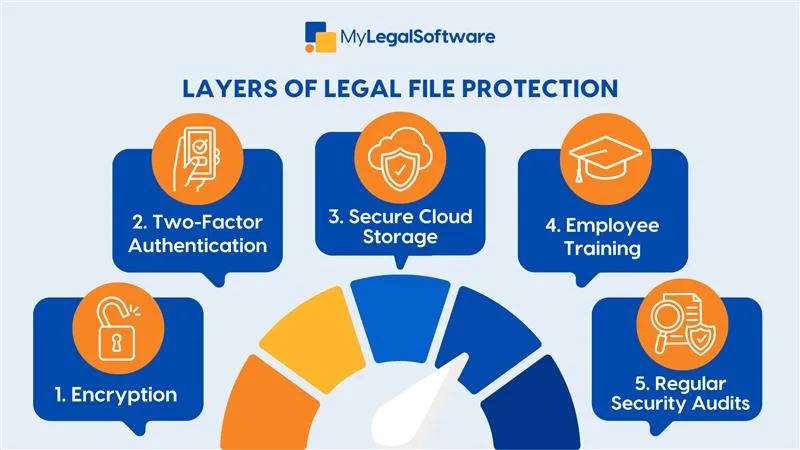
Here’s how you can prevent security breaches in legal files:
-
Layered Security Measures
Multiple defenses mean multiple chances to stop a breach before it spreads. You can use:
- Firewalls
- Intrusion detection systems
- Antivirus software
- Network segmentation
- Multi-factor authentication
- Encryption
If one layer fails, the next one stands guard.
-
Regular Security Audits
Don’t wait for a breach to discover weaknesses. Audit your systems yearly or more often if you handle high-stakes cases. Use automated tools to scan for vulnerabilities and keep your software updated.
-
Employee Training
The best cybersecurity tech can’t stop human error.
Train your team regularly. Teach them to recognize phishing emails, handle confidential data safely, and follow the firm’s security policy. Keep it practical.
Data Breach Consequences
A data breach costs money and credibility.
Your clients expect you to protect their secrets; it’s part of the profession’s principles. Losing that trust could mean losing their patronage.
And with remote work, the risk and cost of breaches continue to rise.
Takeaways
If you want to protect client data in your law firm, you need secure systems, smart people, and consistent habits.
- Use encrypted legal software
- Limit access with permissions
- Keep your systems updated
- Train your staff
- Audit everything regularly
Do this, and you’re already ahead of most firms.
Protect Your Law Firm with MyLegalSoftware
Your clients trust you with their most private information. MyLegalSoftware helps you keep that trust intact.
With top-grade encryption, secure cloud storage, and role-based access, MyLS gives you total control over your firm’s data.
Start a free trial or schedule a demo today.
Frequently Asked Questions
Why is legal file storage security important for law firms?
Law firms handle sensitive information, so they’re prime targets for hackers. Strong legal file storage security protects your firm’s data and keeps you compliant with data protection laws like GDPR and HIPAA.
What are the common causes of law firm data breaches?
Most breaches happen because of phishing emails, weak passwords, outdated software, or human error. Lost or stolen devices and unsecured networks also put your firm at risk.
How can law firms prevent security breaches?
You can reduce risks by layering your defenses. That means using two-factor authentication, role-based permissions, data encryption, and firewalls. Regular audits and employee cybersecurity training also help prevent breaches.
Is cloud storage secure enough for law firms?
Reputable, secure law firm cloud-based storage providers offer encryption, access control, and regular security updates that make their systems safer than traditional on-site servers. Always check that your provider understands legal compliance and confidentiality standards.
What happens if a law firm experiences a data breach?
A breach can lead to financial loss, reputational damage, and even malpractice claims. If client data is exposed, you may have legal obligations to report it and notify affected parties.
How does encrypted legal software help protect client data?
Legal document encryption scrambles sensitive information so only authorized users can read it. Even if hackers access your files, encryption keeps the data useless to them. It’s one of the most effective tools for protecting client data in law firms.
What should lawyers look for in secure document management software?
Choose a solution with built-in encryption, two-factor authentication, activity tracking, and secure client portals. Look for secure document management tools designed specifically for law firms like MyLegalSoftware.
How often should law firms perform security audits?
At least once a year. But if you handle high-profile or sensitive cases, you can do it more often. Regular security audits help detect weak points early before hackers can exploit them.