

Many solo attorneys still manage their practices using spreadsheets, email threads, and disconnected tools.
This way of practice slowly drains revenue, increases risk, and caps your growth. Most solos don’t recognize it until the loss is significant.
What Does Solo Law Firm Software Do
It is an integrated tool. For a solo firm, the proper setup includes:
- Matter and client management in one place
- Time tracking that’s automatic
- Billing and invoicing tied directly to matters
- Trust accounting that follows ethics rules
- Document storage with version control
- Calendars and deadline reminders
- Secure client communication
- Online payments
- Simple reports that show how the firm is doing
It is one system and the source of truth. That’s what modern solo law firm software is built to replace.
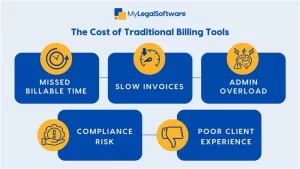
The Cost of Making Do with Basic Tools
Spreadsheets don’t show you what you’re losing. But the losses are significant.
-
Lost revenue from weak time capture
Manual timekeeping leaks money.
When you track time manually or with multiple tools, work goes unrecorded. Integrated timers tied to matters can fix that. And firms that use them consistently bill more.
Missed time is missed income.
-
Slower billing means slower cash.
Old tools mean extra steps. You track time, build invoices, email PDFs, and then you wait. Modern solo law firm software automates that flow.
All you have to do is capture, invoice, send, and pay. Clients pay faster when all they have to do is click and pay.
-
Admin work eats your billable hours
As a solo, every admin hour costs you twice.
You lose time, and income. You are likely reconciling data, chasing invoices, organizing files, and updating calendars across three systems.
Integrated software cuts that noise. You get time back—time to bill, or market, or just to breathe.
-
Compliance risks
Trust accounting errors, missed deadlines, and lost documents are dangerous.
Modern solo law firm software includes safeguards such as audit trails, alerts, and separation of funds. Spreadsheets don’t protect you, but ideal software does.
-
Clients notice outdated systems
Clients now expect portals, online invoices, and secure messaging. Email chains and PDF bills feel old and risky.
Better tools create better experiences, and better experiences drive referrals.
-
No data means guesswork
Without reports, you’re flying blind. Which matters are profitable? Which clients pay late? Where is your time really going?
Integrated dashboards answer these questions.
-
The hidden costs
Avoiding migration today makes it worse tomorrow.
More data, more cleanup, more stress. Skipping training kills ROI. Even great software can fail without developing proper habits.
And security gaps don’t announce themselves. They just show up as incidents, often when it’s too late.
What You Stand to Gain with Proper Solo Law Firm Software
- You onboard clients faster.
- You capture more time.
- You bill easier and better.
- You get paid quicker.
- And you build a practice that grows smoothly.
What to Measure
- Weekly admin hours
- Billable time captured
- Days to get paid
- Invoice write-offs
- Client complaints or delays
Then compare, and the numbers will guide your decision.
How to Choose the Right Software
Keep it simple. Look for:
- Easy time tracking
- Built-in billing and payments
- Matter-based organization
- Deadline protection
- Trust accounting support
- Clear reports
- Strong security
- Real support
MyLegalSoftware (MyLS) as the Ideal Tool for Solo Law Firms
MyLegalSoftware is built to remove friction. It brings your matters, time tracking, billing, documents, and client communication into one secure system. You don’t have to deal with the bloat or complexity meant for large firms. You get clearer visibility into your work, faster billing, and fewer compliance worries.
MyLS offers guided onboarding to help you get set up right from day one. Schedule a demo to see how it fits your practice, or start a free trial and experience the difference for yourself.

Frequently Asked Questions
Do I really need solo law firm software if I’m just one lawyer?
Being solo doesn’t mean no software. Solo law firm software replaces multiple tools, reduces admin work, and helps you capture more billable time without hiring help.
Can’t I continue to use spreadsheets and email for now?
You can. But you’ll likely underbill, invoice slower, and increase compliance risk. Those hidden costs will exceed the cost of proper software.
Is solo law firm software expensive?
Most platforms charge a monthly fee that’s usually less than the value of a few missed billable hours. When you factor in faster payments and time saved, it’s a worthy investment.
Will switching software pause my practice?
Most vendors support data migration and onboarding. A phased rollout keeps work moving while you transition.
Is my data safer in legal software than on my computer?
In most cases, yes. Modern solo law firm software includes encryption, access controls, backups, and audit logs that personal devices and generic tools don’t offer.
Which features matter for a solo firm?
Time tracking, billing with online payments, case management, deadline reminders, trust accounting, and reporting. Everything else can be optional.
Do clients care about portals and online payments?
They do now. Clients expect convenience. Portals and digital payments reduce back-and-forth and make it easier for them to pay.
How long does it take to see results after switching?
You may notice improvements within the first 30 to 60 days. You will likely experience faster billing, better time capture, and fewer admin tasks.
What’s the biggest mistake solo law firms make when choosing software?
Buying tools built for large firms or skipping training. Solo law firm software should feel intuitive and match how you work.
Is it ever okay to stay with manual tools?
Only if your practice is extremely low volume and unlikely to grow. Modern software can help you scale and run your firm better.