

Graduating from law school in 2025 doesn’t mean you have to follow the traditional path of joining a large firm or clerking for a judge. In fact, more new lawyers than ever are choosing to take charge of their future by starting a solo law firm right after law school.
If you’ve found yourself wondering, “How do I start my own law firm after law school?”—you’re not alone. For many new grads, the idea of launching a firm straight out of law school might seem impossible or even overwhelming. But here’s the truth: starting a law firm with no experience is possible, and with the right strategy, mindset, and resources, it can be one of the most rewarding paths you take in your legal career.
In this guide, we’ll walk you through how to start your own law firm after law school—step by step. From choosing your practice area to building your brand, getting your first clients, and managing your firm like a pro, we’re covering it all. Whether you’re still in school or newly licensed, these tips will give you the clarity and confidence to build something that’s truly your own.
Why Start a Law Firm Right After Law School?

Starting a law firm right after law school might seem unconventional, but it’s one of the most powerful ways to take control of your legal career from day one. As a new graduate, your legal knowledge is current, your habits are sharp, and your network is active and growing. Rather than spending years working under someone else, you have the chance to start your own law firm, choose your area of focus, build a client base, and create a schedule that fits your vision.
Taking this bold step doesn’t just make you a lawyer, it makes you an entrepreneur. Even if you’re starting a law firm with no experience, you’ll quickly learn the business side of law: client acquisition, branding, billing, and trust-building, all while sharpening your legal expertise. Though the path comes with challenges, it sets you up early to create a practice aligned with your values and goals—positioning you for long-term success and independence.
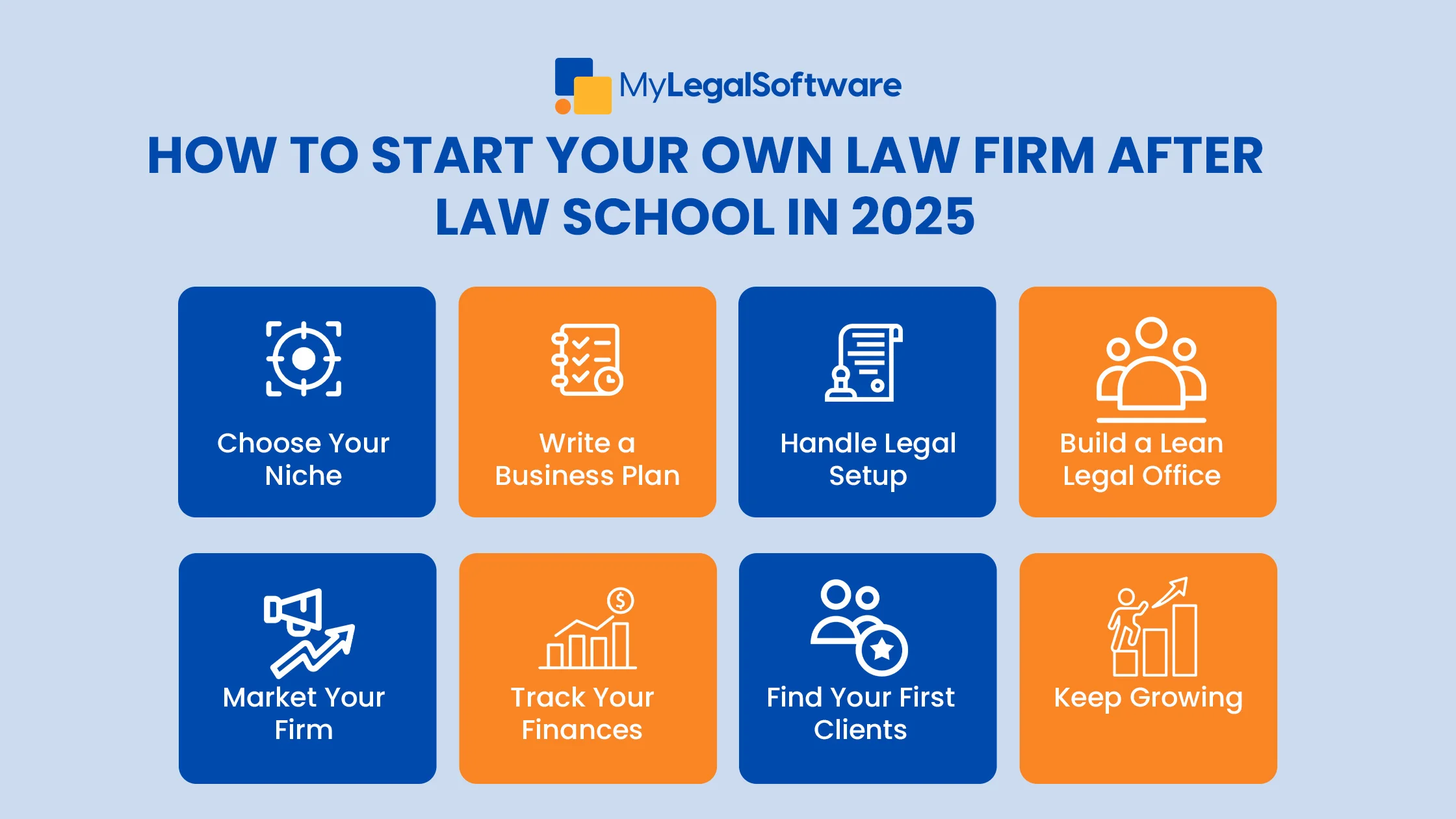
A Step-by-step Guide on How to Start Your Own Law Firm After Law School in 2025
1. Choose Your Practice Area Wisely
When you’re starting a solo law firm right after law school, the first and most important step is to define your niche. This means narrowing down the specific area of law you want to focus on—whether it’s immigration, family law, small business law, or something else entirely. Ask yourself: What legal issues do I genuinely enjoy solving? Which industries or client groups am I naturally drawn to? And most importantly, what legal services are currently in demand in the location where you plan to practice? Defining your niche early gives your new law firm direction, helps you stand out in a competitive market, and positions you as a go-to expert in your chosen field.
Popular solo-friendly practice areas:
- Family Law
- Criminal Defense
- Immigration
- Landlord-Tenant Disputes
- Estate Planning
- Small Business/Startup Law
Choosing the right practice area means finding a balance between your passion, local demand, and profitability. It’s essential to align your choice with where there’s real opportunity, especially if you’re starting a law firm with no experience.
2. Craft a Realistic Business Plan
Starting a law firm after law school requires more than just legal knowledge—you’re also stepping into the role of a business owner. That’s why creating a solid law firm business plan is crucial from the start. Your plan should clearly define your mission and values, outline your target market, and identify your main practice areas. You’ll also need to map out your start-up and recurring expenses, decide on your service offerings and pricing structure, and set realistic growth projections.
Don’t forget to include your marketing plan and client acquisition strategy—these will be vital to attracting clients when you’re starting a solo law firm right after law school. A strong business plan serves as your roadmap, keeping you focused, guiding financial decisions, and clarifying your law firm’s direction from day one.
3. Fulfill Legal and Administrative Requirements
Before you serve your first client, it’s essential to lay the legal and ethical groundwork for your new practice. Starting a law firm after law school means ensuring you’re fully compliant with all state and professional regulations. Here’s what you need to take care of:
1. Choose and Register Your Business Entity
When starting a solo law firm right after law school, decide whether to operate as a sole proprietorship, Professional Limited Liability Company (PLLC), or Professional Corporation (PC). Your choice will affect your liability and tax obligations, so review your state’s rules carefully before registering your entity.
2. Register Your Law Firm Name
Select a professional and compliant name that reflects your practice. Some states require you to register your firm’s name with the state bar or local government. Make sure your chosen name doesn’t violate ethical advertising rules or create confusion.
3. Open a Business Bank Account & Get a Tax ID (EIN)
Separate your personal and business finances from the beginning. Open a dedicated business bank account and obtain an Employer Identification Number (EIN) from the IRS. This is crucial for smooth financial management and maintaining compliance when starting a law firm with no experience.
4. Purchase Professional Liability (Malpractice) Insurance
Even the most skilled lawyers need protection. Getting malpractice insurance shields you from potential legal claims and builds trust with clients. Many clients (and courts) view this as a sign of a serious, responsible legal practice.
5. Review State Bar Rules for Solo Practitioners
Each state has its own ethics guidelines, especially for new solo attorneys. Familiarize yourself with rules around IOLTA (Interest on Lawyers’ Trust Accounts), handling client trust funds, legal advertising, and recordkeeping. These are non-negotiables when you’re starting a law firm right after law school.
Taking these foundational steps not only protects your practice legally but also sets a professional tone as you begin your journey.
4. Start Lean but Smart: Setting Up Your Office
You don’t need a high-rise office to make a strong impression in 2025. In fact, if you’re starting a law firm with no experience, prioritizing smart, affordable tools can elevate your professionalism while keeping costs low. Here’s how to set up a professional solo law firm from anywhere:
1. Use a Virtual Office Address
A virtual office address gives your firm credibility without the high costs of physical office space. It adds legitimacy to your website, business cards, and client communications—especially helpful when starting a solo law firm right after law school.
2. Invest in Law Firm Management Software
Platforms like MyLegalSoftware help you manage cases, track deadlines, store documents, and streamline your daily operations. For someone just starting a law firm after law school, these tools save time and keep everything organized.
3. Build a Professional, SEO-Friendly Website
Your website is your digital storefront. Create clear, optimized pages for your practice areas, include contact details, a FAQ section, and an easy client intake form. This improves your visibility and helps clients find you online. It is crucial when starting a law firm right out of law school.
4. Secure Client Communication Tools
Use encrypted email and virtual portals to protect client confidentiality. Tools like LawPay, Zoom (with security settings), and Clio Grow help you maintain trust and compliance from the start.
5. Set Up a Reliable Case Management & Calendaring System
Missing deadlines is not an option. A case management system ensures you stay on track with court dates, meetings, and filing deadlines. It’s an essential for any lawyer—but especially when starting a law firm with no experience.
By leveraging technology and thoughtful tools, you can run a secure, professional, and efficient law practice, without needing a traditional office.
5. Create a Marketing Strategy That Builds Authority
If you’re wondering how to start a law firm after law school and attract clients right away, the secret lies in building visibility, trust, and credibility from the ground up. Here’s how to market your new firm effectively—even if you’re starting a solo law firm right after law school:
1. Write Guest Posts on Legal Platforms
Contribute to well-known sites like ABA Journal, Law.com, or Medium to boost your authority and get noticed by your target audience. It’s a smart way to position yourself as a credible voice, especially when starting a law firm with no experience.
2. Start a Blog on Your Website
Target local and service-specific keywords like “affordable estate planning attorney in [Your City].” Blogging builds SEO and drives organic traffic to your law firm site.
3. Host Workshops or Webinars
Offer free legal sessions to real estate investors, entrepreneurs, or immigrants—depending on your niche. This positions you as both helpful and knowledgeable.
4. Join Podcasts or Start One
Share legal insights as a guest on niche podcasts or launch your own. It’s a great way to reach a wider audience and explain complex legal concepts in a friendly, personal way.
5. Answer Questions on Legal Forums
Platforms like Avvo, Reddit, and Immigration Question allow you to show thought leadership by helping real people with real problems—boosting both trust and discoverability.
6. Create Valuable Lead Magnets
Offer free downloads like a “Tenant Rights Checklist” or “Startup Legal Essentials Guide. ”This captures leads and builds your email list while solving client pain points.
7. Build Strategic Relationships
Partner with local influencers, community groups, or industry professionals. Word-of-mouth is still one of the most powerful ways to grow when you’re starting your own law firm after law school.
These strategies will not only help you stand out—they’ll help you attract your ideal clients early on, even with zero prior experience.
6. Understand Law Firm Finances (Even If You’re Bad at Math)
Yes, you’re a lawyer, not an accountant. But if you’re starting your own law firm after law school, understanding your finances is just as important as knowing the law. Here’s how to stay on top of your money when you’re starting a solo law firm right after law school, even with no prior experience:
Track Every Dollar
Use law firm accounting software designed to separate your operating funds from client trust accounts (IOLTA). This keeps your practice compliant and audit-ready.
Set Financial Goals
Know your break-even point. How much revenue do you need to generate monthly to cover costs and pay yourself? Set clear income goals early.
Plan for Recurring Costs
Factor in essentials like practice management software, legal marketing, CLEs, malpractice insurance, bar dues, and taxes. Budgeting avoids nasty surprises.
Invoice Promptly & Clearly
Have clear billing terms and send invoices consistently. Transparent retainer agreements and timely billing reduce disputes and improve cash flow.
Staying lean, organized, and financially aware from day one is key to long-term profitability—especially when you’re starting a law firm with no experience.
7. Get Your First Clients (Without Spending a Fortune)
This is where many new lawyers get stuck, one of the biggest hurdles when starting a law firm right after law school, especially if you’re starting a solo law firm with no experience—is figuring out how to find your first clients. Here’s how to get started, even if you’re starting from scratch:
Tap Into Friends and Family
Let your immediate network know about your services. Friends and family referrals often become your first paying clients—and they’re more likely to trust and recommend you.
Leverage Your Law School Alumni Network
Reach out to your alumni community. Many are willing to offer advice, send referrals, or collaborate on cases, especially if you share a school background.
Join Your Local Bar Association’s Referral Program
Most local bar associations offer lawyer referral services that can connect you with potential clients looking for help in your area of practice.
Use Community Platforms Like Facebook Groups & Nextdoor
Engage in local conversations where people ask for legal help. By offering helpful insights (without giving legal advice), you position yourself as a go-to resource.
Offer Low-Cost or Flat-Fee Consultations
Provide accessible consultations for simple legal matters. Just be sure to include clear disclaimers and set expectations, especially when you’re still starting your own law firm after law school.
Volunteer for Pro Bono Opportunities
Pro bono work isn’t just meaningful; it builds experience, credibility, and connections. It’s also a great way to build confidence when you’re just getting started.
In the early stages, your focus should be on serving well, showing up consistently, and building trust. Remember, starting a law firm after law school doesn’t mean starting alone—it means starting smart. Great service leads to great referrals.
8. Keep Learning, Keep Improving
Starting a law firm right after law school can feel overwhelming at times, but remember, you’re not expected to know everything from day one. Growth is part of the journey. Here’s how to keep improving and stay competitive, even if you’re starting a law firm with no experience:
Stay Updated Through CLEs
Continuing Legal Education (CLE) courses are not just a requirement; they’re a chance to sharpen your skills and stay ahead in your chosen practice area. Make it a habit to take relevant courses regularly.
Follow Legal Marketing Blogs and Podcasts
If you’re asking, “How do I start a law firm after law school and attract clients?”—legal marketing resources are your best friend. Platforms like Clio’s blog or podcasts like “Lawyerist” offer real-time, actionable insights on running and marketing a solo firm.
Join Local Business Networking Groups
These groups help you meet potential clients and build referral relationships. Even if you’re starting your own law firm with no prior clientele, a consistent presence in your local business community can fast-track your visibility.
Reflect Monthly on Progress
Take time each month to assess what worked, what didn’t, and what needs tweaking. When starting a solo law firm right after law school, regular reflection helps you adapt and grow smarter.
Building a sustainable solo practice is a marathon. Stay humble, open to feedback, and committed to your personal and professional growth. Success takes time—but with the right habits, it’s more than possible.
FAQs: Answering What People Search for
-
-
How much does it cost to start a law firm after law school?
-
Startup costs vary, but you can aim for a startup capital of $3,000–$10,000 and start virtual, keeping overhead low.
-
-
Can I star t a law firm with no experience?
-
Yes, if you choose the right niche, invest in mentorship or continuing education, and use management tools to streamline operations.
-
-
What’s the first step in starting a law firm out of law school?
-
Decide your practice area and draft a solid business plan. Don’t jump in without a clear vision.
Conclusion: Start Smart, Serve Boldly
Starting your own law firm after law school in 2025 is not only possible, it’s practical. With the right mindset, smart tools, and a strategic plan, you can go from law grad to law firm owner faster than ever before.
Focus on serving your clients well, building smart systems, and growing your presence organically. In the end, the most powerful business strategy is this: serve others exceptionally.
Ready to launch your virtual solo firm?
Try MyLegalSoftware 14-days free trial to skyrocket your virtual workspace and move with ease and precision.