

Anyone who has spent time in a law office knows the scene. A partner walks in, ready to start a brief, only to find herself sorting through client emails questioning charges, time entries that got lost somewhere between the conference room and the billing system, and a pile of receipts waiting to be entered into a spreadsheet.
All before she has even taken a sip of her coffee. It is a familiar frustration because while inefficient invoicing is tedious, it doesn’t stop there- it also quietly drains a firm’s time, accuracy, and patience. And it invites the larger question: what if a firm could rely on a system that captures the work as it happens, organizes the pieces, and keeps the billing conversations civil?
Why Inefficient Invoicing Costs More Than You Think
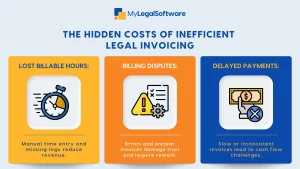
The legal industry prides itself on precision. Yet billing, one of the most sensitive areas of client service, often becomes a patchwork of manual entries, memory guesses, and last-minute reconciliations. The true cost hides in those tiny gaps. A few minutes missed here, an expense forgotten there, and suddenly a month’s worth of billable time looks thinner than the work that was done.
Firms that rely heavily on manual processes often learn this the hard way, and the consequences show up not only in revenue but also in client trust. A single unclear law firm invoice can trigger questions that take longer to resolve than the work being billed.
Delayed payments have become another issue. When invoices arrive with inconsistencies or lack clarity, clients take longer to pay, and staff spend more of their days sending follow-ups. The burden shifts from practicing law to doing administrative triage. Over time, the financial ripple effects become hard to ignore. Even the most skilled attorneys cannot overcome a cash flow bottleneck caused by preventable inefficiencies.
How Smarter Software Steadies the Billing Process
Modern legal software doesn’t just digitize old processes. It reshapes how the work gets done. When your time tracking, documents, cases, and invoicing all live in one place, your billing finally works the way it should. The software records your time as you work, instead of relying on foggy memories later. It keeps expenses tied to the right case, so they don’t get lost. And it gives clients clean, easy-to-read invoices that cut down on confusion and follow-up questions.
Where Accuracy Meets Daily Efficiency
A strong system catches errors before they leave the firm. Duplicate entries, missing descriptions, or out-of-policy expenses are flagged early. This single shift in timing prevents the awkward, often tense conversations that follow when clients spot the mistake before the firm does. On top of that, integrated client portals turn the billing experience into a transparent exchange: clients can view their invoices, see supporting documents, and pay online without a flurry of emails.
The Data Advantage
Another quiet benefit comes from analytics. Reports that track realization rates, aging invoices, unpaid balances, and write-offs give partners the ability to course-correct before patterns become problems. In a profession that depends on judgment, these numbers give firms the grounding they need to make better operational decisions.
What To Look for When Choosing Your Invoicing Solution
Case Integration That Ties Work Together
The best systems link tasks, documents, emails, and time entries to each case, so invoices reflect the whole picture. When attorneys do not need to search for multiple tools to assemble a single law office invoice, accuracy naturally improves.
Streamlined Pre-billing Review
A pre-bill stage with built-in approvals encourages healthier billing habits firm-wide. Reviewers can quickly scan entries, fix issues, and move the invoice along without stopping to copy information between tools. The result is smoother billing cycles and fewer disputes.
Easy Payment Options for Clients
Client portals with online payment features shorten the time between invoice and payment. By reducing friction, firms protect their cash flow and reduce the administrative burden on staff.
Moving From Good Intentions to Real Implementation
Firms often know they have a billing problem long before they make a change. The challenge is not awareness; it is disruption. Implementing legal software feels intimidating until it becomes part of the everyday routine. A phased approach works best. Start with a small group that can test the system and produce early wins.
Standardize billing templates and activity codes, so everyone speaks the same billing language. Offer short, focused training sessions rather than one long presentation that no one will remember. And keep revisiting the metrics. When the team sees fewer billing disputes and faster payments, adoption becomes second nature.
The Real Difference Between Old Habits and Modern Tools
Traditional invoicing methods rely on memory, paper trails, and the goodwill of busy staff. Modern invoicing prioritizes accuracy and structure, which frees attorneys to practice law without constantly playing catch-up. The choice is not between convenience and control; it is between a system that quietly drains a firm’s resources and one that protects them.
A Better Approach Is Within Reach
The cost of inefficient billing shows up in lost hours, frustrated clients, delayed payments, and unpredictable revenue. Software designed for the pace and pressure of legal work can reverse that trend. It brings order to workflows that have long depended on improvisation, and it replaces guesswork with reliable data. Firms that adopt modern invoicing tools do not just save time. They create healthier client relationships, stronger financial footing, and a steadier rhythm of work.
To see how MyLegalSoftware can help your firm regain clarity and control, schedule a free demo and discover a smoother way to manage your billing from start to finish.

Frequently Asked Questions
- What causes inefficiencies in legal invoicing?
Inefficiencies usually stem from manual time entry, inconsistent billing formats, scattered expense tracking, and the use of disconnected tools. These gaps create errors, delays, and extra administrative work that slow down the billing cycle.
- How can law firms reduce billing errors?
Firms reduce errors by using legal invoicing software that automates time capture, standardizes billing templates, and flags issues before invoices reach clients. Automation removes guesswork and limits the manual steps that often lead to mistakes.
- Why do clients dispute legal invoices?
Clients typically dispute invoices when descriptions are unclear; charges seem inconsistent, or supporting documentation is missing. Better transparency through client portals and well-structured invoices help reduce these disputes.
- What are the benefits of automated time tracking for law firms?
Automated time tracking helps attorneys record time as they work, improving accuracy, and increasing billable hours. It also prevents forgotten entries and provides documentation that supports the final invoice.
- Is legal invoicing software worth the cost for small firms?
Yes. Smaller firms often feel the impact of lost billable hours and delayed payments even more strongly. Software that streamlines invoicing and improves cash flow typically pays for itself through recovered time, fewer write-offs, and faster collections.