

A partner opens her inbox and finds an email from a long-time client: “We love working with you, but this invoice has charges we don’t understand. Can you explain?” The partner feels a familiar sinking feeling: an hour will be spent tracking time notes, reformatting a PDF, and answering questions that could have been avoided.
What if your firm could prevent that email altogether? What if clients could see exactly what they’re being billed for in real time, and trust the numbers without a second thought?
Why Transparency Matters (and Why Old Methods Fail)
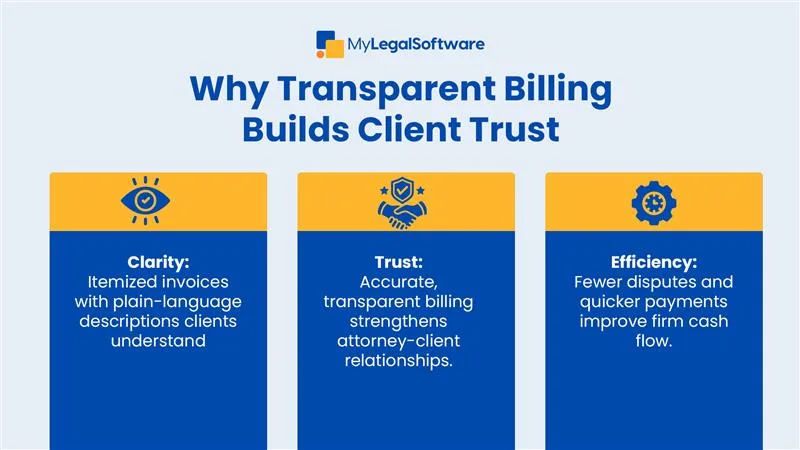
Clients expect clarity. When invoices arrive vague or late, questions turn into disputes, and disputes turn into delayed payments. That hurts cash flow and damages relationships.
Traditional billing: paper invoices, spreadsheets, and after-the-fact line items, creates gaps:
- Time entries buried in lawyers’ notes
- Line-item descriptions that don’t translate for clients
- Manual reconciliation errors in trust accounting
Transparent billing tools eliminate those friction points and directly support client trust billing software, legal billing transparency, and stronger client relationships.
Key Features of Transparent Billing Tools
Real-time time tracking and matter tagging
Allows time to be recorded with context and attached to the correct matter immediately. Clients see which tasks created the charges.
Itemized, client-friendly invoices
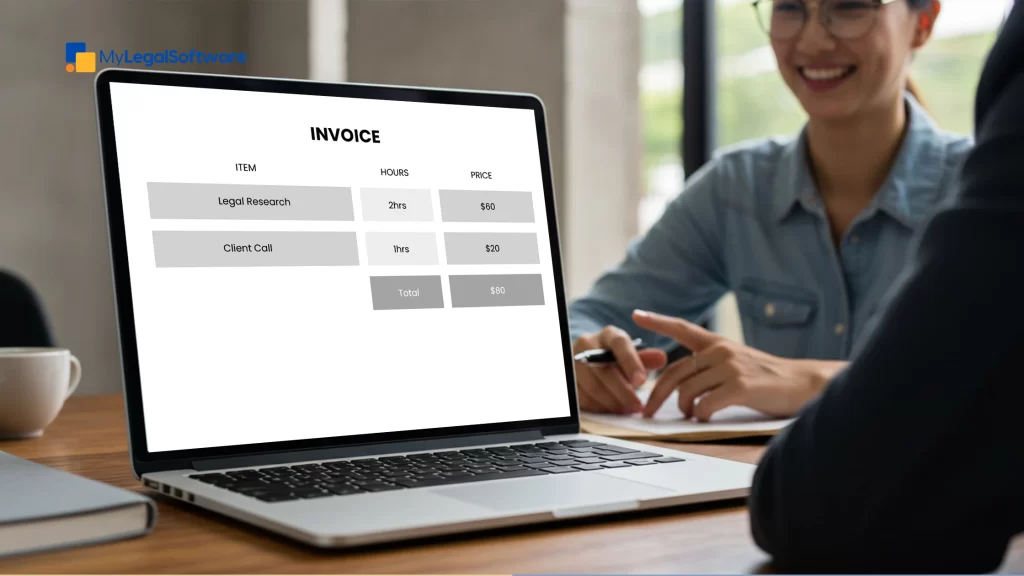
Automatic generation of itemized invoices with plain-language descriptions; not internal shorthand.
Secure client portals
Clients log in to view statements, download invoices, and ask questions; all tied to the billing record.
Trust accounting and compliance tracking
Built-in controls to manage retainer draws and meet law firm trust accounting tools requirements.
Audit logs and immutable records
Every change is tracked, so disputes are resolved quickly by referring to a single source of truth.
Automated billing rules & alerts
Set thresholds, approval workflows, and automated notifications for overdue items or unusual entries.
Integrations & APIs
Connect timekeeping, matter management, accounting, and calendaring for seamless data flow and fewer manual reconciliations.
How Transparent Billing Tools Improve Efficiency and Trust
Short, scannable benefits your team will notice:
- Fewer billing disputes: When clients see what they’re paying for, questions drop.
- Faster collections: Clear invoices reduce hesitation and speed up approvals.
- Less administrative rework: Automated itemization and templates cut manual formatting.
- Higher realization rates: Attorneys capture billable time more accurately when timekeeping is simple.
- Stronger client relationships: Transparency signals fairness and professionalism.
Comparison: Transparent Software vs. Traditional Billing
Traditional (spreadsheets + PDF invoices)
- Manual entry, high error risk.
- Delayed invoices.
- Clients lack visibility until bill arrives.
Transparent billing tools (modern software)
- Real-time entries and matter-level visibility.
- Immediate, clear invoices and client access.
- Built-in trust accounting and audit trail.
Modern tools reduce disputes, speed payment, and improve law firm billing accuracy.
Step-by-Step Guide to Implementing Transparent Billing Tools
A pragmatic rollout that minimizes disruption.
Step 1: Define objectives and KPIs
Decide what you want: fewer disputes, faster collections, better realization. Choose KPIs:
- Average days to payment
- Number of billing disputes per month
- Realization rate (billable hours captured vs. billed)
Step 2: Audit current processes
Map how time is recorded, who approves invoices, and how trust accounting is handled. Identify pain points.
Step 3: Choose a vendor and pilot group
Pick a team to pilot (e.g., two partners + 4 associates). Confirm features: client portal, time tracking, trust accounting.
Step 4: Configure and integrate
Set matter codes, billing templates, retainer rules, and integrate with accounting software. Keep templates plain-language friendly.
Step 5: Train and document
Run short, role-based sessions: partners, associates, billing staff, and front-desk. Provide a one-page guide for quick reference.
Step 6: Go live with monitoring
Launch, track KPIs, and gather staff and client feedback. Iterate on templates and messaging.
Step 7: Scale and institutionalize
Expand to all practice groups, schedule quarterly audits, and incorporate billing transparency best practices into onboarding.
Best Practices for Adoption and Training
- Appoint a billing champion. One person owns the rollout and answers questions.
- Use plain language in invoices. Replace “RDG_III” with “Research: contract review (2.0 hrs).”
- Standardize matter codes. This reduces misclassification and eases reporting.
- Enforce short time-entry windows. Encourage time entries daily to improve accuracy.
- Train clients on the portal. A 5-minute walkthrough eliminates confusion and increases portal adoption.
- Run monthly reconciliation and quick audits. Spot errors before they become disputes.
Handling the Tricky Parts: Mobility, Discounts, and Retainers
- Mobility & remote teams: Use mobile time capture so remote hearings and phone calls are logged in real time.
- Discounts & alternative fee arrangements: Configure templates to show original price, discount applied, and clear explanations.
- Retainer management: Automate retainer depletion notifications and retainer replenishment requests to avoid surprises.
Sample Client-Facing Billing Message (Use in Onboarding or Portal Welcome)
Hello [Client Name],
Welcome to our client billing portal. Here you’ll be able to:
- View itemized invoices with plain-language descriptions.
- Check retainer balances and upcoming payment dates.
- Download statements and submit billing questions directly.
Our goal is transparency: if you ever want more detail on a charge, click “Ask about this item” and our billing team will respond within 24 hours.
Use this short message in your client onboarding emails and portal welcome screens to proactively build client confidence in billing.
KPIs to Track After Launch
- Days Sales Outstanding (DSO)
- Billing dispute rate (disputes per 100 invoices)
- Client portal adoption rate
- Realization percentage
- Number of manual adjustments per month
Tracking these signals lets you measure the tangible value of attorney billing management improvements.
Addressing Common Objections
“It’s too expensive.”
Think of it as an investment: fewer disputes, faster collections, and time saved on admin often offset subscription costs.
“Our team won’t adopt it.”
Start with a small pilot, use champions, and keep training short and practical.
“Clients won’t use a portal.”
Most clients prefer clarity; give them a 1–2 minute tutorial and offer optional email summaries.
Clear Billing = Stronger Relationships + Healthier Cash Flow
Transparent billing tools do more than prettify invoices. They change client expectations and behaviors. When clients see clear, itemized, and timely invoices, trust grows, disputes shrink, and payments follow faster.
Cloud-based, integrated tools improve law firm billing accuracy and make legal invoice clarity a routine part of client service, not an afterthought. That’s what MyLegalSoftware helps you achieve.
Schedule a free demo to see how MyLegalSoftware can bring transparent billing to your firm and transform how clients experience billing.
Frequently Asked Questions
What are transparent billing tools and how do they differ from traditional billing systems?
Transparent billing tools provide clients with clear, line-by-line invoices, real-time visibility into charges, and secure client portals. Unlike traditional billing (spreadsheets, vague descriptions, late invoices), they reduce disputes and increase transparency, helping law firms build client trust billing software and legal billing transparency.
How does billing transparency actually increase client trust and reduce disputes?
When clients understand exactly what they’re paying for with dates, descriptions, hours, and matter codes, they’re less likely to question or refuse payment. Clear invoices lead to fewer misunderstandings, faster approvals, and stronger long-term relationships.
What’s the best way for a law firm to adopt transparent billing tools without disrupting operations?
Start small. Choose a pilot team, configure core features (client portal, itemized invoices, trust accounting), train staff in short sessions, and monitor key metrics (dispute rate, days to payment). Scale gradually and refine based on feedback.