
Case management keeps law firms running.
When it’s faulty, everything else slips. Deadlines are missed, clients complain, revenue drops, and stress piles up.
But when it works, output is predictable and profitable.
To avoid the former, firms today have opted for case management software and modern legal case management solutions.
If you are one of these attorneys or you’re planning to make the switch, here are the case management best practices every attorney should know.
Centralize Your Work
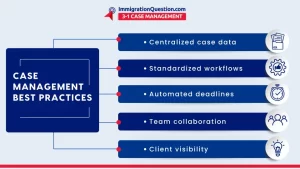
Don’t compromise on centralization.
If your case data can be found in email trails, shared drives, spreadsheets, and someone’s memory, you’re probably already losing.
A solid case management application keeps documents, notes, deadlines, and communication in one place. So, when you need something, it’s easy to find.
Best practice:
- One digital system for every case
- Cloud access for secure remote work
- Permission controls for sensitive files
Centralization is the foundation. Everything else builds on it.
Standardize How Work Gets Done
Every case shouldn’t feel like you’re reinventing the wheel.
Standard workflows reduce mistakes and make delegation possible. So, create repeatable steps for common matters. Intake follows the outline: Filing, Review, Follow-up, and Closing.
Best practice:
- Use checklists and templates
- Document workflows clearly
- Train everyone to follow the same process
Consistency will save you a lot of time.
Use Case Management Software with Built-In Workflows
Most systems scale.
Modern case management platforms combine tasks, documents, deadlines, and collaboration in one place. No bouncing between tools. This is where case management automation is essential.
Best practice:
- Automate reminders and follow-ups
- Assign tasks inside the case file
- Keep discussions tied to the matter
Less manual work and fewer errors.
Track Deadlines Automatically
Missed deadlines damage clients and expose firms to risk. There’s no excuse for manual tracking anymore.
Your legal case management solution should do this for you.
Best practice:
- Central calendar tied to each case
- Automated alerts
- Visibility for attorneys and staff
Using your memory is an unreliable way to track deadlines.
Fix Communication Gaps
Many issues aren’t technical, they are due to communication failures.
Scattered emails. Lost messages. No context. Case-based communication can change that.
Best practice:
- Keep conversations inside the case
- Schedule short internal check-ins
- Make priorities visible
This way, everyone knows what to do and when.
Control Documents Like Your License Depends on It
Because it does.
Legal work involves lots of documents, and mistakes happen when versions aren’t controlled.
Your case management software should handle this cleanly.
Best practice:
- Clear folder structures
- Version history
- Audit trails
This way, you get the correct document and the right version every time.
Measure What’s Happening
If you don’t track performance, you’re only guessing.
Smart firms use data from their case management platforms to see delays, bottlenecks, and workload imbalance.
Best practice:
- Track turnaround times
- Review dashboards regularly
- Adjust workflows based on data
Delegate Like a True Business Owner
Attorneys shouldn’t be doing admin work, that’s inefficient and likely expensive.
Strong case management best practices rely on trained staff owning defined parts of the process.
Best practice:
- Delegate intake and prep work
- Train staff on the system
- Let case managers manage
Understand that time is your most valuable asset.
Tie Billing to Case Activity
Billing problems usually start when time tracking is not allocated to cases.
Integrated case management applications can help fix this.
Best practice:
- Log time as work happens
- Link billing directly to cases
- Invoice consistently
Enjoy better cash flow and fewer disputes.
Keep Improving or Fall Behind
Legal work and client demands are changing, and it is all due to technological changes.
So your process should too.
Best practice:
- Review workflows regularly
- Get feedback from the team
- Update tools and habits
Case management isn’t a one-time setup, so you should adapt.
Give Clients Clarity
Client portals within legal case management solutions provide case clarity.
Best practice:
- Secure access to documents and updates
- Automated milestone notifications
- Clear boundaries on what clients can see
Transparency builds clients’ trust in your work.
Control Versions and Access
Permissions and version history protect you from potential conflicts.
Best practice:
- Role-based access
- Tracked edits
- Full audit trails
ImmigrationQuestion.com for Modern Case Management
ImmigrationQuestion.com 3-1 Case Management fits how law firms work today. It brings case tracking, task management, and communication into one system.
If you’re serious about applying case management best practices in daily practice, this is the kind of tool that supports the work. You can start with a free trial or schedule a demo and see how it fits into your firm’s routine.

Frequently Asked Questions
1. What is case management software for law firms?
Case management software is a digital system that helps attorneys manage cases from intake to closure. It centralizes documents, tasks, deadlines, communication, and billing in one place, keeping work organized.
2. Where can I find scalable case management software for legal firms?
You can find scalable case management software from legal-focused platforms built to grow with your firm. Look for cloud-based case management software that supports small teams and expanding practices. ImmigrationQuestion.com 3-1 Case Management is a tool that adapts as your caseload and team grow.
3. Why are case management best practices important?
Because legal work is detail-heavy.
Strong case management best practices reduce errors, protect against missed deadlines, and help firms use time and staff more effectively.
4. How do legal case management solutions reduce risk?
They automate deadline tracking, maintain document version history, and preserve audit trails. This lowers the chance of missed filings or unclear responsibility on a case.
5. What is case management automation?
Case management automation refers to using software to handle repetitive tasks like reminders, task assignments, status updates, and document generation. It reduces manual work and improves reliability.
6. Can case management platforms support team collaboration?
Modern case management platforms like ImmigrationQuestion.com 3-1 Case Management allow attorneys, paralegals, and staff to collaborate inside the case file. Tasks, comments, and updates are all connected to the matter.
7. How does a case management application improve client experience?
Clients receive faster responses and fewer delays. When internal workflows are organized, communication becomes more professional.
8. Do I need case management software if I already use spreadsheets and email?
Spreadsheets and email may not scale well. They lack automation, version control, and visibility. Case management software replaces fragmented tools with one connected system that supports long-term growth.