

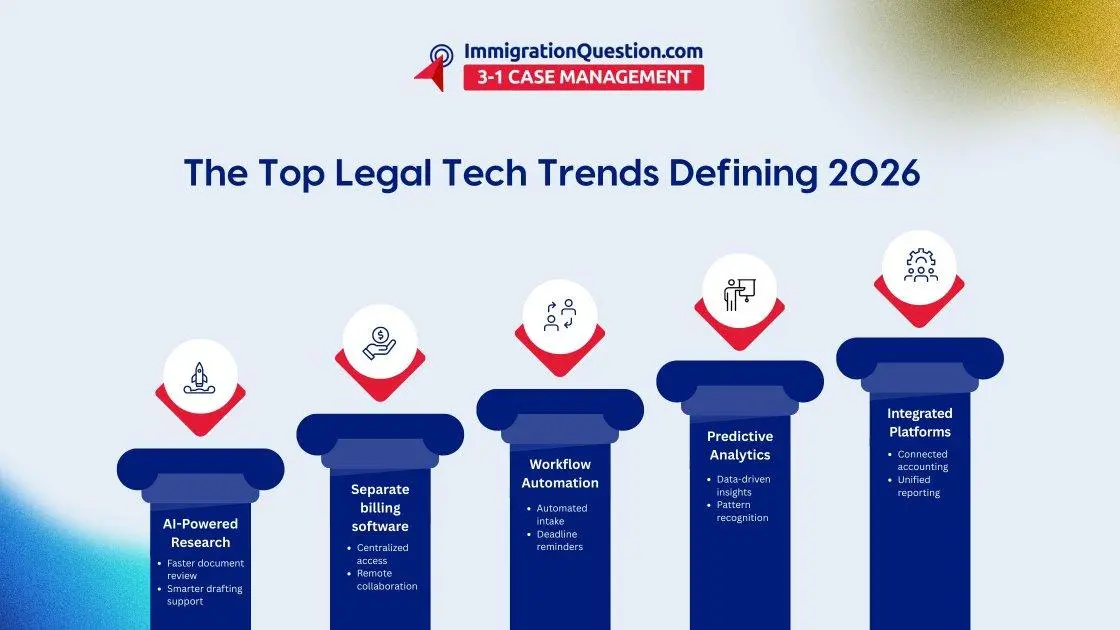
The legal industry in 2026 continues to evolve alongside rapid digital transformation. Law offices, independent practitioners, and in-house departments are reassessing how they deliver services in an increasingly data-driven environment. This year’s legal tech trends reflect a growing emphasis on structured workflows, intelligent automation, and digital accessibility.
Importantly, legal tech growth is no longer limited to large global firms. Mid-sized and smaller practices are also adopting modern systems to streamline documentation, communication, and case tracking.
The focus is not simply on innovation, but on building sustainable and organized operations.
AI-Powered Research and Drafting
Artificial intelligence remains one of the most influential forces in legal services technology for their ability to analyze large volumes of case law, summarize documents, and assist with drafting structured legal content.
Rather than replacing attorneys, AI tools reduce repetitive work. Tasks like reviewing lengthy contracts or sorting through discovery materials can now be completed more efficiently. Legal professionals retain responsibility for interpretation and strategic direction, while AI systems function as supportive infrastructure.
This balance between human judgment and machine assistance defines much of the current transformation.
The Continued Rise of Law Based Tech Startups
Innovation in 2026 is strongly influenced by Law tech startups. These companies are focusing on practical operational challenges rather than theoretical disruption. Their solutions target areas such as contract lifecycle management, remote collaboration, digital intake, and analytics reporting.
These companies continue expanding their platforms to meet the needs of both independent practitioners and enterprise legal departments. Startup-driven competition has encouraged established providers to refine user experience, improve integration capabilities, and strengthen cybersecurity frameworks.
Cloud-Based Case Management as an Industry Standard
Cloud adoption is now foundational across legal practices. In 2026, most firms rely on centralized systems that allow secure access across devices and locations. Hybrid work environments and remote hearings have reinforced the need for digital accessibility.
Cloud-based case management supports:
- Organized document storage
- Deadline monitoring
- Shared communication logs
- Digital billing integration
Instead of managing scattered spreadsheets and paper files, firms operate through structured dashboards that consolidate workflows in one place. This shift enhances operational visibility and coordination.
Automation of Administrative Processes
Administrative tasks have traditionally consumed substantial time within legal practices. In 2026, automation tools handle many of these repetitive functions.
Appointment scheduling, structured intake forms, automated reminders, and digital document assembly are increasingly common. Billing systems track time entries in real time and generate financial reports without extensive manual input.
Automation does not eliminate oversight. Instead, it supports consistency and reduces clerical burden. Legal teams can redirect attention toward case preparation, communication, and analytical tasks.
Cybersecurity and Data Governance
As legal services technology expands, data protection remains a top priority. Law offices manage highly sensitive information, and digital adoption requires careful governance.
Firms are investing in:
- Multi-factor authentication
- Role-based access controls
- Encrypted communication systems
- Internal data audits
Technology providers are also refining infrastructure to address evolving cybersecurity concerns. Strengthening digital safeguards supports operational continuity and responsible information management.
Client-Focused Digital Tools
In 2026, clients expect speed, clarity, and transparency. Many individuals and organizations prefer digital portals that provide structured updates.
Modern platforms offer secure document uploads, status tracking dashboards, and centralized communication logs. These tools reduce misunderstandings and repetitive inquiries, contributing to smoother coordination.
Digital transparency is now considered a core element of legal services technology rather than an optional feature.
Predictive Analytics and Strategic Insights
Another defining feature of legal tech growth is the adoption of predictive analytics. These tools examine historical case data to identify patterns and trends. While they do not provide legal advice, they offer data-informed insights that can assist with preparation.
Analytics systems track litigation trends, analyze motion outcomes, and review settlement timelines across jurisdictions. As access expands beyond large enterprises, mid-sized firms are increasingly integrating data insights into their strategic planning.
Integrated Technology Ecosystems
Legal departments are no longer operating in isolation from broader business systems. In 2026, integration across platforms is common practice.
Case management systems connect with accounting software, reporting dashboards, and internal communication tools. This interconnected approach allows smoother data flow, reduces duplication, and strengthens operational oversight.
The result is a more cohesive technology ecosystem that supports informed decision-making.
Grow Your Law Practice with Structured Case Management
The direction of Legal tech trends in 2026 reflects a clear shift toward integration, automation, and operational clarity. Firms that invest in structured legal services technology are better positioned to manage increasing demands while maintaining organization.
If you are exploring a platform that combines case tracking, document management, and communication tools within one centralized environment, consider ImmigrationQuestion.com 3-1 Case Management. This system brings essential workflow components together in a single interface designed to support organized legal operations.

Frequently Asked Questions
1. What are the main Legal tech trends in 2026?
Key trends include AI-assisted research, cloud-based case management, workflow automation, predictive analytics, cybersecurity investments, and integrated digital platforms.
2. How are Law tech startups shaping the industry?
Law tech startups focus on solving operational challenges through specialized tools for contract management, analytics, digital intake, and collaboration. Their innovation contributes significantly to legal tech growth.
3. Are AI systems replacing attorneys?
AI tools assist with research and document organization. Licensed attorneys remain responsible for interpretation, strategic planning, and professional judgment.
4. What characterizes the Top legal companies 2026?
Organizations recognized in 2026 typically demonstrate continuous product development, scalable technology platforms, strong data governance practices, and user-focused design.
5. How can smaller firms adapt to legal tech growth?
Smaller firms can begin by adopting cloud-based case management and automation tools. Gradual implementation allows teams to strengthen workflows while maintaining operational stability.