

The legal industry is changing rapidly. From solo practitioners to growing multi-location firms, attorneys are turning to legal technology solutions to manage increasing workloads, improve organization, and strengthen communication. But with so many platforms available, how does ImmigrationQuestion.com 3-1 case management compare to other options in the market?
The Growing Demand for Smarter Legal Practice Technology
Modern legal professionals manage case files, court deadlines, billing records, staff coordination, and client communication all at once. Many firms still rely on spreadsheets, email threads, paper folders, or disconnected applications. This creates inefficiencies such as:
- Files scattered across devices
- Missed reminders and follow-ups
- Delays in internal communication
- Difficulty tracking billable time
- Slow document retrieval
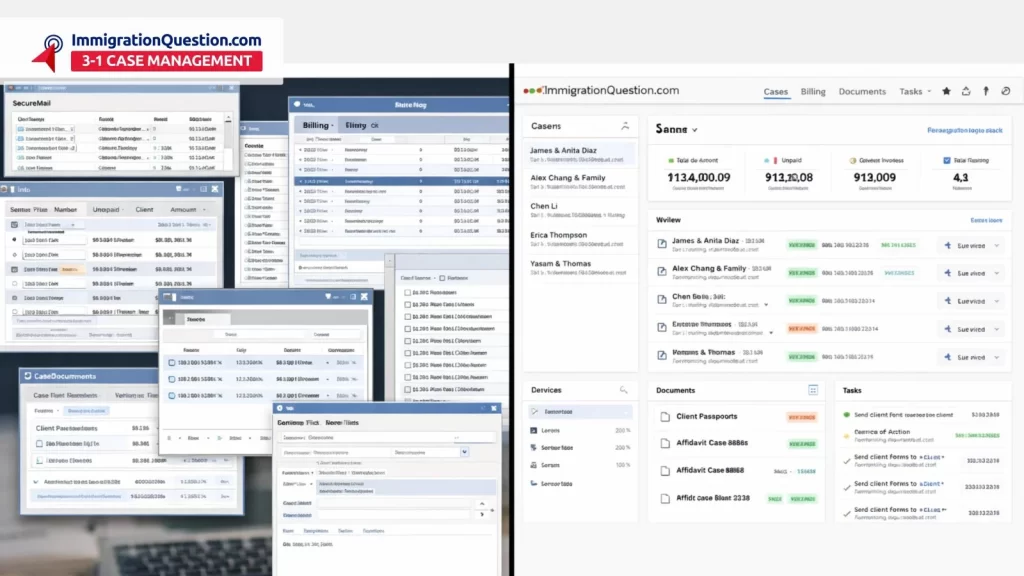
As legal practice technology evolves, firms are looking for centralized systems that bring everything together instead of layering tool upon tool.
That is where legal automation tools positions itself differently.
Designed Specifically for Law Firms
Some legal technology solutions are adapted from general business software. While they may include project management or file storage capabilities, they are not built around legal workflows.
ImmigrationQuestion.com 3-1 case management is structured specifically for attorneys and legal professionals. The platform organizes case details, notes, timelines, and documentation in a way that reflects how legal matters progress. This reduces the learning curve and allows firms to implement structured processes without reinventing their internal systems.
For firms comparing law firm software, this distinction matters. A system designed for legal practice technology understands case stages, deadlines, document handling, and billing workflows unique to the profession.
Workflow Automation That Reflects Real Practice Needs
Legal automation tools often focus narrowly on document templates or automated emails. ImmigrationQuestion.com 3-1 case management expands automation into daily task management.
With built-in workflow triggers and task lists, firms can:
- Standardize intake procedures
- Assign tasks to team members
- Set reminders for court dates and filings
- Reduce manual tracking
- Maintain consistent follow-up processes
This approach supports structured growth. Instead of relying on memory or manual checklists, firms can build repeatable systems inside the platform.
As legal software trends shift toward efficiency and scalability, workflow automation remains one of the strongest differentiators among competing platforms.
Case Tracking in a Unified View
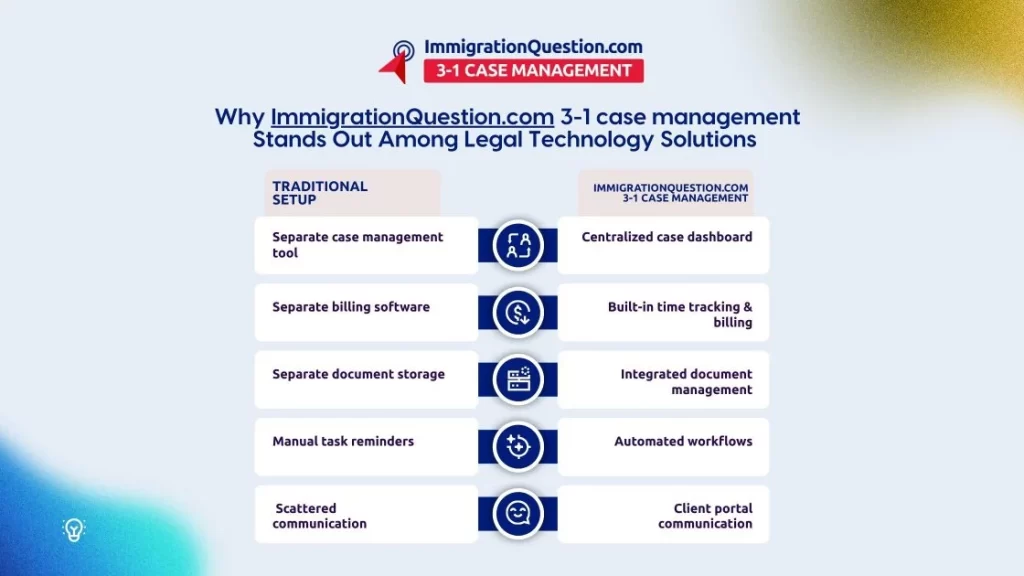
One of the common frustrations with older systems is fragmented case information. Notes may be in one place, documents in another, billing records somewhere else.
Legal automation tools brings contacts, case history, files, activity logs, and communication into a single dashboard view. This reduces time spent searching for updates and improves internal coordination.
Compared to some legal tech startups that prioritize design but lack depth in organization, the case management software balances usability with structured case oversight.
Document Management that Reduces Clutter
Document storage is central to any law firm software. However, many firms still rely heavily on local drives or generic cloud storage platforms.
Legal automation tools allow users to upload, tag, categorize, and retrieve documents quickly within each case file. This prevents version confusion and scattered attachments across email threads.
Because document access is integrated directly into case management, there is no need to switch between multiple applications.
Billing and Time Tracking Integration
Another area where legal technology solutions differ is financial workflow integration.
Some platforms require separate accounting tools for time capture and invoicing. ImmigrationQuestion.com 3-1 case management includes built-in time tracking and billing functionality, allowing firms to:
- Log billable hours accurately
- Generate invoices from tracked activity
- Monitor financial performance in context with case progress
This integrated structure reduces administrative overhead and supports more consistent billing practices.
Client Communication Through a Centralized Portal
Communication delays often create friction between firms and their users. Email-only communication can result in lost attachments or missed updates.
ImmigrationQuestion.com 3-1 case management includes a client portal where documents, updates, and messages can be shared in an organized format. This helps maintain professional communication without relying solely on scattered email threads.
As tech for lawyers continues to evolve, structured digital communication is becoming a core expectation rather than an optional feature.
Cloud-Based Flexibility Without Complexity
Legal software trends increasingly favor cloud-based platforms. Attorneys need access from courtrooms, offices, and remote environments.
ImmigrationQuestion.com 3-1 case management operates as a cloud-based system, allowing teams to work from different locations without maintaining local servers. At the same time, the interface is built to remain intuitive, minimizing extended onboarding time.
For firms comparing legal tech startups with established platforms, usability and structured navigation are major decision factors.
Scalability for Growing Firms
Some legal automation tools work well for solo practitioners but become restrictive as teams expand.
ImmigrationQuestion.com 3-1 case management is structured to scale from individual attorneys to multi-location firms. As staff grows, workflow automation, centralized case tracking, and team collaboration features support structured expansion without operational chaos.
Firms evaluating legal practice technology often prioritize scalability, particularly when planning long-term growth.
How ImmigrationQuestion.com 3-1 case management Stands Out
When comparing the system to other legal technology solutions, several distinctions emerge:
- Built specifically for legal workflows
- Centralized all-in-one functionality
- Integrated billing and case management
- Structured workflow automation
- Cloud-based accessibility
- Designed for both solo and growing firms
Rather than acting as a single-purpose tool, the case management software functions as a full operational framework for legal practice management.
Making the Right Technology Choice
As law firms navigate increasing complexity, adopting the right legal technology solutions becomes essential. ImmigrationQuestion.com 3-1 case management brings case management, document organization, workflow automation, billing, and communication into one centralized platform designed specifically for legal professionals.
Frequently Asked Questions
1. What makes ImmigrationQuestion.com 3-1 case management different from other law firm software?
It centralizes case tracking, billing, document management, and communication within one platform, reducing the need for multiple disconnected tools.
2. Is the case management system suitable for small firms?
Yes. It is structured to support solo practitioners while also scaling to accommodate growing teams.
3. How does workflow automation help legal professionals?
Workflow automation helps standardize task assignments, deadline reminders, and follow-ups, reducing manual tracking and improving consistency.
4. Does the software follow current legal software trends?
Yes. It reflects trends such as cloud-based access, integrated billing, automation, and structured client communication within a centralized system.
5. Can ImmigrationQuestion.com 3-1 case management replace multiple legal automation tools?
In many cases, yes. Because it combines case management, billing, document handling, and communication, firms may reduce reliance on separate tools.