

Late afternoons in law offices tend to look the same everywhere. Someone is hunting for the most recent version of a filing. Someone else is asking whether the client was updated. Billing waits until tomorrow because the time entries are scattered across three places and one very tired brain. Everyone is working hard, yet the system itself seems to be working against them.
This is usually the moment when a firm decides it needs case management software. The problem is not the decision to modernize. It is how that decision is made. Too often, law firms rush into attorney case management software believing that any digital solution must be better than the chaos they know. What they discover later is that the wrong software can quietly recreate the same disorder, only now it lives behind a login screen.
The Trouble with Choosing Software the Way People Choose Shoes
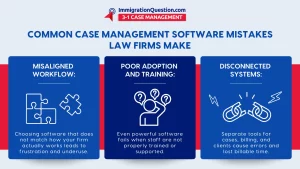
Law firms often select legal case management software the way people buy shoes online. It looks good. It is popular. It claims to fit everyone. Only later does the discomfort set in. Software that does not reflect how a firm operates becomes an obstacle rather than a tool, especially when workflows were never examined in the first place.
When Features Replace Judgment
One common misstep is being dazzled by feature lists. Vendors promise everything from automated billing to client portals to advanced reporting. The result is software that tries to do too much and does little of it well for your particular practice. A small firm handling immigration or family law does not work the same way as a large litigation shop, yet both are often pitched the same law firm case management software. The best legal software for small firms understands that simplicity and clarity often beat complexity.
Another recurring problem is usability. Attorneys are not resistant to technology. They are resistant to tools that waste time. When attorney practice management software is difficult to navigate, staff revert to old habits. Spreadsheets reappear. Emails become filing systems. The software sits there, quietly ignored, while the firm wonders why nothing has improved.
Billing, Clients, and the Things Firms Forget to Connect
Billing deserves special attention because it is where inefficiencies turn into lost revenue. Many firms still treat time tracking as an afterthought, using separate tools that do not connect cleanly to their case management software. The result is predictable. Hours go unrecorded, invoices go out late, and partners sense something is wrong without being able to pinpoint it. Integrated case management software closes these gaps by tying time entries directly to matters and invoices, which is where law firm management software proves its value.
Client communication is another area firms underestimate. Clients today expect transparency and timely updates. Email alone cannot carry that load securely or efficiently. Legal case management software with built-in client portals allows firms to share documents, post updates, and reduce repetitive inquiries. Firms that ignore this feature often pay for it in strained client relationships and unnecessary back-and-forth.
Growth, Training, and the Long View
Software That Stops Working When You Grow
Some firms choose attorney case management software free or low-cost options without thinking about what happens next year. Growth has a way of exposing weak foundations. A system that works for two users may collapse under ten. A platform without reporting tools becomes a liability when partners ask basic business questions. The best law firm software scales without forcing a disruptive migration just when the firm can least afford one.
Adoption Is Not Automatic
Even the best legal case management system fails without proper adoption. Training is not a luxury or a final step. It is central to success. Firms that treat onboarding as a box to check often find themselves paying for legal software programs that only one or two people understand. When training is intentional and phased, the software becomes part of the firm’s culture rather than an obligation.
What Getting It Right Actually Looks Like
Choosing the right law office management software is less about chasing trends and more about honest self-assessment. Firms that succeed start by identifying where time is lost, where errors creep in, and where clients feel disconnected. They evaluate usability as carefully as features. They insist on integrated time tracking, secure document management, and client-facing tools that reduce friction rather than add to it.
Modern law practice management software replaces fragmented computer programs for lawyers with a single source of truth. Cases, documents, deadlines, billing, and communication live in one system. The payoff is not flashy. It is quieter than that. Fewer mistakes. Clearer workflows. More time spent on billable work and less on administrative cleanup.
A Smarter Next Step
Case management software should work the way a good assistant does. It anticipates needs, reduces clutter, and makes everyone more effective without demanding constant attention. When firms choose thoughtfully, legal case management software becomes an asset rather than another problem to manage.
If your firm is ready to move beyond trial and error, the next step is simple.
Schedule a free demo and see how MyLegalSoftware helps law firms manage cases, clients, and billing with clarity and control.

Frequently Asked Questions
What Is Case Management Software for Law Firms?
Case management software helps law firms organize cases, documents, deadlines, billing, and client communication in one centralized system.
Why Do Law Firms Struggle with Case Management Software?
Many firms choose software that does not match their workflow or is too complex for daily use, leading to poor adoption and inefficiency.
What Features Should Law Firms Look for in Case Management Software?
Key features include centralized case tracking, document management, time tracking, billing integration, and secure client portals.
Is Case Management Software Worth It for Small Law Firms?
Yes. The best legal software for small firms improves organization, reduces administrative work, and helps capture more billable hours.
How Long Does It Take to Implement Legal Case Management Software?
Most firms can begin using modern legal case management software within a few weeks, depending on training and data migration needs.