
Somewhere between the last client call of the day and the promise of heading home on time, a familiar irritation surfaces. A family law client is confused by line items that sound like they belong in a corporate boardroom. A corporate client pushes back, asking for more detail and tighter formatting. An immigration client wants reassurance that government fees were billed correctly. None of these concerns are unreasonable, yet all of them drain time, patience, and revenue.
What if your firm could produce legal invoices that spoke clearly to each audience without extra effort? What if billing stopped being a source of friction and started reinforcing trust?
That is where modern legal software, used thoughtfully, changes the tone of the conversation.
Why Legal Invoices So Often Miss the Mark
Invoices are not just financial documents. They are a form of communication, and too many law firms underestimate how much they say.
A generic law firm invoice tries to satisfy everyone and ends up satisfying no one. Family law clients want clarity and reassurance. Corporate clients want precision and compliance. Immigration clients want transparency, especially around filing fees and timelines. When all three receive the same law office invoice, confusion follows, then emails, then delayed payments.
Legal software does not fix this problem by itself. Customization does.
What Every Legal Invoice Must Get Right
Before customization comes structure. A legal invoice still needs to meet professional and ethical standards, no matter the practice area.
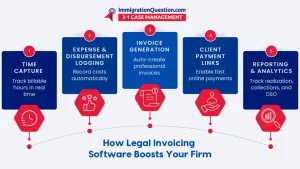
At a minimum, it should clearly identify the firm, the client, the matter, the billing period, and the services provided. Charges should be itemized, totals should be unmistakable, and trust or retainer balances should be easy to spot. When these basics are handled consistently, customization becomes a matter of emphasis rather than reinvention.
This is where purpose-built legal invoice software earns its keep. It standardizes the essentials while leaving room for nuance.
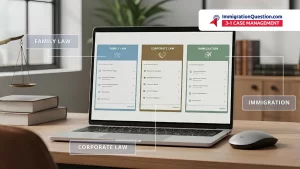
How Customization Looks in Different Practice Areas
Family Law: Clarity Over Complexity
Family law clients are rarely in a calm state of mind. They are navigating custody, finances, and personal upheaval, often all at once. An invoice that reads like a technical manual only adds stress.
A well-designed family law invoice favors plain language and logical grouping. Charges are organized by phase or event rather than obscure task codes. Descriptions explain what was done and why it mattered. The goal is not to impress but to reassure.
Legal software allows firms to build family law invoice templates that reflect this tone automatically, without asking attorneys to change how they record their time.
Corporate Law: Precision And Professionalism
Corporate clients, by contrast, are not looking for reassurance. They are looking for accountability. Many operate under strict billing guidelines and review legal invoices with a careful eye.
Here, detail is not a burden. It is a requirement. Corporate law invoices benefit from granular time entries, attorney identifiers, and structured task-based billing. Expenses must be clearly separated, and formatting must feel polished and deliberate.
Customization ensures that a corporate law office invoice meets these expectations every time, reducing rejected bills and accelerating approval cycles.
Immigration Law: Transparency Builds Trust
Immigration clients often measure progress in milestones rather than hours. They want to know what portion of their bill went to legal work and what portion went to government agencies.
An effective immigration legal invoice makes these distinctions obvious. Legal fees and filing fees are separated. Descriptions reference case stages rather than internal processes. The result is an invoice that answers questions before they are asked.
With the right software, immigration practices can preset these categories, so transparency is built into every invoice by default.
The Software Features That Make Customization Practical
Customization sounds good in theory, but it only works if the tools support it without adding administrative weight.
Modern legal software makes customization manageable through practice-area-based invoice templates, automated time tracking, and configurable billing rules. Attorneys log time once, and the system handles how it appears on the final legal invoice. Client portals then deliver those invoices clearly and securely, shortening the path from billing to payment.
Moving Away from Manual Billing
Traditional billing methods rely heavily on spreadsheets, generic accounting tools, and last-minute edits. They create room for error and quietly consume billable time.
Legal invoice software replaces that with a single system. It connects cases, time entries, expenses, and invoices in one place. The result is fewer mistakes, faster billing cycles, and less back-and-forth with clients over charges that could have been explained more clearly from the start.
Making The Transition Stick
Adopting customized legal invoicing works best when firms move deliberately. Many start with one practice area, refine the template, and then expand. Attorneys are more likely to buy in when they see fewer billing disputes and faster payments. Staff appreciate systems that reduce manual cleanup. Over time, firms often discover that better invoices do more than improve cash flow. They improve relationships.
A Final Word on Legal Invoices and Trust
A legal invoice may seem like a small thing, but it carries outsized meaning. It reflects how well a firm understands its clients and how seriously it takes communication. Customizing your law firm invoice for family, corporate, and immigration practices is not simply about looks. It is about respect, clarity, and efficiency.
ImmigrationQuestion.com 3-1 Case Management helps law firms turn invoicing from a recurring problem into a quiet strength.
Schedule a free demo to see how ImmigrationQuestion.com 3-1 Case Management can help your firm create clearer, smarter legal invoices that work for every practice area.
Frequently Asked Questions
What Is a Legal Invoice?
A legal invoice is a billing document that itemizes legal services, time spent, expenses, and fees charged to a client for a specific matter.
Why Should Law Firms Customize Their Invoices?
Customized legal invoices improve clarity, reduce billing disputes, and help clients better understand what they are paying for, which often leads to faster payments.
How Do Family Law and Corporate Law Invoices Differ?
Family law invoices focus on clear, plain-language descriptions, while corporate law invoices typically require detailed time entries, structured billing, and formal formatting.
Can Legal Software Automatically Generate Invoices?
Yes. Modern legal software can automatically generate law firm invoices using preset templates based on practice area, time entries, and billing rules.
What Should an Immigration Law Invoice Include?
An immigration law invoice should clearly separate legal fees from government filing fees and show charges tied to case milestones or application stages.