It’s another workday and your desk is buried under a paper avalanche. Emails from clients are unanswered. Court deadlines are colliding like bumper cars. You sip your coffee and wonder: how did anyone ever get anything done before software?
Now imagine if every case, every client update, and every document lived in one place, neat as a row of law books. That’s what you get with full court case management; it’s a sanity-saving tool for the legal world.
Key Challenges Without Modern Court Software Solutions
Before software, courts and law firms relied on what we might call “organized chaos.” Important papers got lost, deadlines slipped, and mistakes multiplied. Staff, attorneys, and clients were stuck playing phone tag or sending endless emails. Reporting on case progress or compliance often meant long nights poring over spreadsheets. The more manual work involved, the higher the chance of human error, sometimes with costly consequences.
If that scenario sounds familiar, that’s because it is. The legal world was begging for a better way.
How Full Court Case Management Improves Judicial Systems
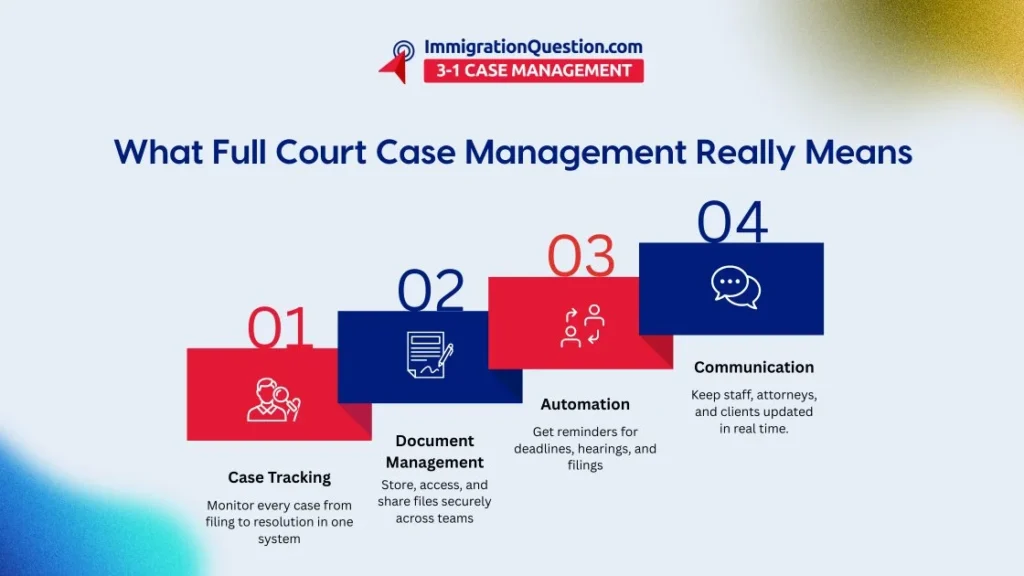
Full court case management software doesn’t just tidy up your files. It changes the game. Attorneys and court staff can track cases from filing to resolution without juggling sticky notes. Documents are stored securely and shared across departments with a few clicks. Time tracking and billing become automatic, freeing up hours once lost to administrative tasks. Clients can see case updates via secure portals, reducing constant phone calls and emails. Automated alerts and validation catch errors before they snowball.
The result is a legal operation that runs more smoothly, letting courts and law firms focus on what really matters instead of chasing paperwork.
Real-World Applications of Court Case Software
Take a step into any court office today, and you’ll see why software matters. Family courts keep custody hearings and visitation schedules organized without the usual calendar chaos. Criminal courts track defendants, court dates, and compliance with ease, while civil litigation teams manage discovery documents and settlement agreements in a single, unified system. Administrative courts make sure filings and notices never fall through the cracks. When everything runs this smoothly, the daily grind eases for everyone, from overworked clerks to anxious clients.
Key Features of Court Case Management Software
A solid software package should cover these essentials:
- Case Management: End-to-end tracking from filing to resolution.
- Time Tracking and Billing: Accurate logging and invoicing of billable hours.
- Client Portals: Let clients see updates without picking up the phone.
- Reporting and Analytics: Quick insight into trends, performance, and compliance.
- Task Automation: Automated reminders for hearings, filings, and deadlines.
These tools turn chaos into order without making anyone a tech wizard overnight.
Step-by-Step Guide to Implementing Court Software Solutions
Rolling out new software can feel daunting, but here’s a sensible approach:
- Assess Needs: Figure out what actually slows you down.
- Select the Right Software: Compare features, security, and scalability.
- Train Staff Thoroughly: Don’t assume people “will figure it out.”
- Migrate Existing Data: Digitize carefully and import files methodically.
- Monitor Performance: Track efficiency gains and tweak workflows as needed.
It’s a straightforward roadmap to make tech work for you rather than against you.
Comparison With Traditional Methods
Paper files, spreadsheets, sticky notes—classic, but painfully slow. Digital court case software makes searching for documents almost instantaneous. Automated validation reduces human error. Everyone sees the same up-to-date case information, improving transparency. And when caseloads grow, the system scales without overloading staff. In short, software doesn’t just keep up with the modern legal world—it gives courts a chance to get ahead.
Best Practices for Law Firm Adoption
To get the most from court case management software, start small with one department before rolling it out across the firm. Standardize processes so everyone follows the same workflow. Encourage staff to share feedback—they see friction points first. And make sure the software stays current; updates bring new features and improvements that keep your system sharp. Follow these practices and adoption will be smoother, with less disruption to daily work.
Take Control with Court Case Software
Full court case management is more than a software upgrade. It’s a way to reclaim time, reduce errors, and make legal work less stressful. With everything centralized, courts and law firms can focus on delivering justice efficiently instead of drowning in paperwork.
Schedule a free demo to see how ImmigrationQuestion.com 3-1 Case Management can transform your law firm’s workflow with modern court case software.

Frequently Asked Questions
- Why Do Judicial Systems Need Court Case Management Software?
Judicial systems use court case management software to improve organization, reduce manual errors, and speed up case workflows so courts can focus on delivering justice rather than managing paperwork.
- What Features Should I Look for in Court Case Software Solutions?
Good court case software includes case tracking, document management, client portals, time and billing tools, automated reminders, and reporting features that all work together in one platform.
- Does Full Court Case Management Software Improve Communication?
Yes, by centralizing case information and offering secure client access, court case management software reduces fragmented communication and keeps judges, staff, attorneys, and clients on the same page.
- Is Court Case Management Software Only for Large Courts?
No. Courts of all sizes benefit from court case management software because it improves efficiency, streamlines workflows, and helps smaller teams handle larger caseloads without extra staff.
- Can Full Court Case Management Software Help with Compliance?
Yes. The reporting tools and automated reminders in court case management software help ensure filing deadlines, regulatory requirements, and procedural rules are consistently met.